
1 Peter 4:1-6 "Living Differently with Yourself" (Part 3 of 3)
BIG NEWS + Our weekly (and minorly famous) Devotional, Prayer Guide, ICYMI Reading and Podcast links, Events Calendar, and of course, the “Two Thumbs Up!”recommendation of the week.
[First Things]
-
Faithful Presence is in a campaign to bring on a Director of Partnerships. If you are interested in participating, watch the video below.
-
Please let us know if you are interested in joining an in-person Washington discipleship cohort or reading group, have a pastoral concern, or are interested in our resources for churches.
-
Our new podcast series starts begins THIS WEEK with many great guests.
[The Devo] Valuing Experiences Differently from Others
4 Since therefore Christ suffered in the flesh, arm yourselves with the same way of thinking, for whoever has suffered in the flesh has ceased from sin, 2 so as to live for the rest of the time in the flesh no longer for human passions but for the will of God. 3 For the time that is past suffices for doing what the Gentiles want to do, living in sensuality, passions, drunkenness, orgies, drinking parties, and lawless idolatry. 4 With respect to this they are surprised when you do not join them in the same flood of debauchery, and they malign you; 5 but they will give account to him who is ready to judge the living and the dead. 6 For this is why the gospel was preached even to those who are dead, that though judged in the flesh the way people are, they might live in the spirit the way God does. 1 Peter 4:1-6
One might ask, “How does valuing relationships differently connect to living differently with ourselves?” That’s a fair question. In the section dealing with House Tables, we discussed living differently in relationships that often featured a power differential: the governed and the governor, the bondservant and the master, the wife and the husband. These are all relationships, but not all relationships are the same. Some are chosen for us while others are chosen by us.
First Century Relationships
Here, Peter is pressing his Christ-recalibrated thoughts on relationships to those in which we have agency or participate in by choice. For people coming to faith in Asia Minor during the first century, those relationships had to be re-evaluated by their effect on the lives of the new living stones and their subsequent effect on the larger spiritual house that God was building. Peter’s readers are surrounded by people who think differently, act differently, and have different values. They are living in a world where sexual promiscuity, including with children, is widespread and socially acceptable. Hedonism, the pursuit of human passions through relationships, has woven itself throughout culture: the theater, gladiatorial games, and the necessary cultural indoctrination of children. Roman citizens across the empire were encouraged to worship any or all of the pantheon of gods, but they all were expected to worship Caesar.
We are given insight into the early church’s intentionality in dealing with the worldly connections of new converts to Christianity in a second-century document, The Apostolic Tradition. Somewhere around 215 AD, Hippolytus, an elder of the church in Rome, wrote a document that was intended to correct what he saw as dangerous cultural accommodation by the rapidly expanding church and its leadership.
15 Those who are newly brought forward to hear the Word shall first be brought before the teachers at the house, before all the people enter. Then they will be questioned concerning the reason that they have come forward to the faith. Those who bring them will bear witness concerning them as to whether they are able to hear. They shall be questioned concerning their life and occupation, marriage status, and whether they are slave or free. If they are the slaves of any of the faithful, and if their masters permit them, they may hear the Word. If their masters do not bear witness that they are good, let them be rejected. If their masters are pagans, teach them to please their masters, so that there will be no blasphemy. If a man has a wife, or a woman has a husband, let them be taught to be content, the husband with his wife, and the wife with her husband. If there is a man who does not live with a woman, let him be taught not to fornicate, but to either take a wife according to the law, or to remain as is. If there is someone who has a demon, such a one shall not hear the Word of the teacher until purified.
16 They will inquire concerning the works and occupations of those are who are brought forward for instruction. If someone is a pimp who supports prostitutes, he shall cease or shall be rejected. If someone is a sculptor or a painter, let them be taught not to make idols. Either let them cease or let them be rejected. If someone is an actor or does shows in the theater, either he shall cease or he shall be rejected. If someone teaches children (worldly knowledge), it is good that he cease. But if he has no (other) trade, let him be permitted. A charioteer, likewise, or one who takes part in the games, or one who goes to the games, he shall cease or he shall be rejected. If someone is a gladiator, or one who teaches those among the gladiators how to fight, or a hunter who is in the wild beast shows in the arena, or a public official who is concerned with gladiator shows, either he shall cease, or he shall be rejected. If someone is a priest of idols, or an attendant of idols, he shall cease or he shall be rejected. A military man in authority must not execute men. If he is ordered, he must not carry it out. Nor must he take military oath. If he refuses, he shall be rejected. If someone is a military governor, or the ruler of a city who wears the purple, he shall cease, or he shall be rejected. The catechumen or faithful who wants to become a soldier is to be rejected, for he has despised God. The prostitute, the wanton man, the one who castrates himself, or one who does that which may not be mentioned, are to be rejected, for they are impure. A magus shall not even be brought forward for consideration. An enchanter, or astrologer, or diviner, or interpreter of dreams, or a charlatan, or one who makes amulets, either they shall cease, or they shall be rejected. If someone's concubine is a slave, as long as she has raised her children and has clung only to him, let her hear. Otherwise, she shall be rejected. The man who has a concubine must cease and take a wife according to the law. If he will not, he shall be rejected. (Courtesy of St. John’s Church Arlington, full text here)
Written for instruction to church leaders for evaluating those seeking membership in the church, Hippolytus makes it clear that the convert has choices to make when he writes, “he shall cease or shall be rejected.” Those choices came with tangible relational costs as well as vocational and economic costs.
How are we to live this out? Paul makes it clear that Christians will have relationships with non-Christians,
9 I wrote to you in my letter not to associate with sexually immoral people— 10 not at all meaning the sexually immoral of this world, or the greedy and swindlers, or idolaters, since then you would need to go out of the world. 11 But now I am writing to you not to associate with anyone who bears the name of brother if he is guilty of sexual immorality or greed, or is an idolater, reviler, drunkard, or swindler—not even to eat with such a one. 12 For what have I to do with judging outsiders? Is it not those inside the church whom you are to judge? 13 God judges those outside. “Purge the evil person from among you.” 1 Corinthians 5:9–13 (ESV)
Peter is not advocating isolation from the world and those who do not share our Christian faith. Rather, he is focusing on the nature of those relationships, and especially vocational relationships. This, then, is the inflection point. Because how we value our relationships has everything to do with living with ourselves. To put it bluntly, we are inclined to choose relationships by what they can do for us.
Twenty-First Century Relationships
Just like the elect exiles of first-century Asia Minor, we are called to reflect upon the nature of our relationships. Not surprisingly, we tend to choose relationships that maximize our pleasure, minimize our suffering, and jettison them when they bring suffering. As Peter says,
For the time that is past suffices for doing what the Gentiles want to do, living in sensuality, passions, drunkenness, orgies, drinking parties, and lawless idolatry. 4 With respect to this, they are surprised when you do not join them in the same flood of debauchery, and they malign you.
High School
Returning to my high school reunion was a wonderful experience. But not for everyone. I spoke with several individuals who still carried wounds from the relational isolation they experienced. One might properly call this - suffering. My encouragement to them was to acknowledge the hurt internally and also realize that the caste systems that existed in high school were real, but temporary. We are rescued from them at graduation. However, when you are living in the middle of high school, you are willing to do just about anything to have the popular people accept you. Conversely, for popular people (high side power differential), the social cost of befriending one of the uncool people (low side power differential) could prove devastating. No one, especially a high schooler, wants to be maligned by their friends. This is the nature of the relational choice Hippolytus is referring to in his letter.
The Public Square
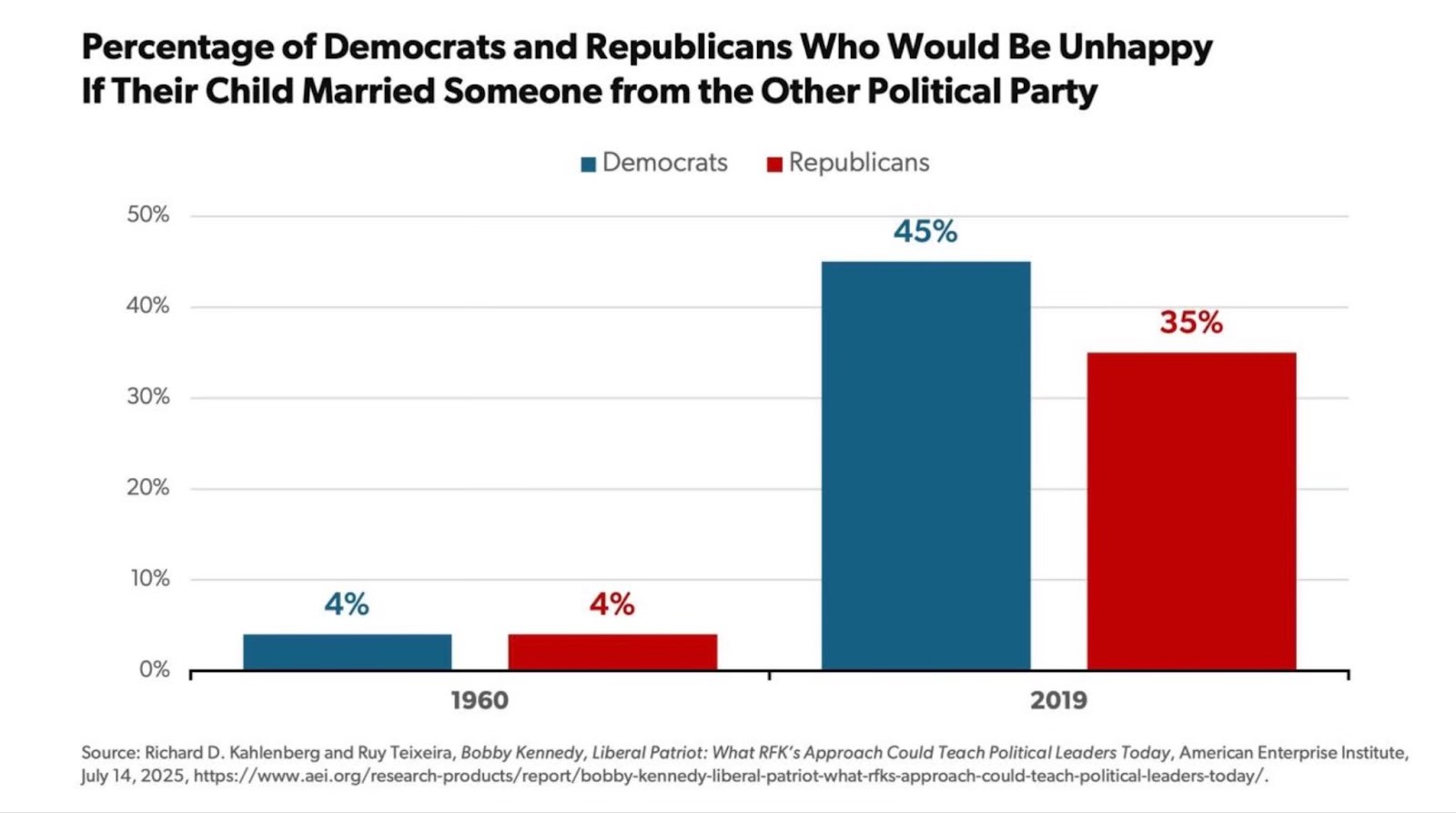
This also applies to relationships within the public square. A recent infographic (see above) points out the pressure of the public square on our relationships, and the cultural pressure that causes us to evaluate relationships on non-biblical criteria.
At church conferences, I sometimes hear the following conflated to include political beliefs: “Do not be unequally yoked with unbelievers. For what partnership has righteousness with lawlessness? Or what fellowship has light with darkness?” (2 Corinthians 6:14) I typically respond with, “Two of the disciples were Simon the political and religious Zealot and Matthew the corrupt tax collector. Certainly, their political views were starkly divergent. Since Jesus picked them and made them Apostles, does that mean he was unequally yoked to one of them or both of them?”
Political evaluation of relationships was not what Paul was communicating to the church at Corinth or Peter to the elect exiles of Asia Minor. They had no concept of party politics since there was a Caesar at the time. This conflation presumes that party platforms are coterminous with Christian orthodoxy and orthopraxy (which they are not). Sadly, we did not get here accidentally, and the Christian church bears much blame for encouraging this trend of polarization based on a misapplied valuation of relationships.
Real Relationships
As we have noted throughout this section, suffering and the avoidance of it have much to do with how we value important aspects of being human, like time, experiences, and relationships. We are inclined to value time, experiences, and relationships that bring high pleasure and low suffering. But Peter points to Christ as our example in the valuing of relationships. He was offered opportunities to avoid suffering by Satan, the Pharisees, and Pilate. Instead, he chose relationships with sinners, tax collectors, the poor, the sick, and outcasts, and even Peter, who would deny any affiliation with him. Christ’s valuation of relationships ended not just with suffering, but with death - a death which paid the price for our sins. Importantly, some of those sins are comprised of improper valuation of relationships: both those we choose to maintain because of what they bring us in the eyes of public opinion, and those we avoid because of what they cost us in the eyes of public opinion.
Application Questions
How would a closer examination and re-evaluation of individual relationships benefit the church as a whole today?
How does suffering factor into your valuation of relationships?
Which of your relationships require re-revaluation and re-calibration? Why?
[Faithful Prayer]
-
Cabinet Agency: Servants and leaders with the U.S. Geological Survey, which brings an array of earth, water, biological, and mapping data and expertise to bear in support of decision-making on environmental, resource, and public safety issues, including earthquakes.
-
Think Tank, Lobby group, NGO: Servants and leaders at The Hoover Institution (based in California with a location in Washington), which seeks to improve the human condition by advancing ideas that promote economic opportunity and prosperity while securing and safeguarding peace for America and all mankind.
-
Weekly delegation: Servants and leaders of the congressional delegation from the state of California.
-
Agency News: The USGS is conducting low-level airplane flights beginning as soon as late July over the Black Hills and Bear Lodge areas of Wyoming and South Dakota to image geology using airborne geophysical technology. The flights are a collaborative effort between the U.S. Geological Survey’s Earth Mapping Resources Initiative and the state geological surveys of South Dakota and Wyoming, and are part of a national effort to modernize mapping of the nation’s geology. This initiative will have numerous economic implications related to mining, oil production, and water access. Read more here.
-
Personal requests: For someone headed to an overseas warzone for six months to train local partners in counter-terrorism. For someone serving at an overseas embassy (also for their family, which includes two small children), providing regular analysis to the ambassador. For a couple (who both serve at the highest levels of an agency), vacationing with family for a month. For a couple (a policy consultant and a senior-level permanent committee Hill staff member), wrapping up a month-long vacation to reconnect with friends and work on a book. For a couple (a senior policy firm staff member and a chief Cabinet sub-agency government services worker) who are headed for a day-long retreat on Saturday, hosted by Faithful Presence. For a political Cabinet-agency appointee working on a deadline to implement a reorganization within the agency.
[The Page, The Pod & The Stack]
-
READ this FIRST → Christianity Today has a piece from Russell Moore that is “ripped from the headlines” that speaks to our interest in the salacious and the evil, Why We Want to See the Epstein Files.
-
LISTEN to this FIRST → The Center for Bioethics and Human Dignity presents the plenary address from Living in the Biotech Century: The First 25 Years, How Should We Then Die? A Christian Response to Physician-Assisted Death, with Ewan Goligher, MD, PhD, FRCPC.
-
Read this Next → 9 Marks has a piece that is relevant for people who are living only temporarily in a city (and EVERYONE else), Why Join a Church?
-
Comment’s latest issue is out! The cream of the crop is an essay by Chris Owen, Listen, which beautifully uses sailing and motor-boating as a metaphor for listening to the world and people around us.
-
The Lakelight Institute has a spot-on article (2022 reprint from Faith & Investing) on why the integration of faith & work is not just important but also worth the work and wait, “From Chaos to Goodness.”
[What’s Happening?]
This Week
-
Tuesday, July 22, 5:30 PM to 7:00 PM EDT, the American Enterprise Institute hosts an in-person event, Meet the Stars: Screening the FREE Initiative’s Mini-Documentary Films.
-
Wednesday, July 23, 11:00 am - 12:00 pm EDT, CSIS presents a hybrid event, Rising India and the Prospects for India–U.S. Economic Ties, for an important discussion on the future of India–U.S. economic ties in a changing global landscape.
-
Thursday, July 24, 3:00 pm - 5:00 pm EDT, the Urban Institute hosts a hybrid event, The Past, Present, and Future of Credit Scores in Housing Finance, for a data-driven, evidence-based discussion on the evolution of credit scores in the housing finance ecosystem.
-
Thursday, July 24, 5:30 pm - 7:30 pm EDT, The Institute on Religion and Democracy hosts an in-person event, the July Christian Realism Social Hour, to partake in drinks and smart Christian Realist conversation with friends.
-
Thursday, July 24, 5:30 pm - 8:30 pm EDT, the Cato Institute presents its annual Libertarianism vs. Conservatism Intern Debate, as it explores which philosophy offers better solutions to today’s pressing public policy challenges
-
Friday, July 25, 12:00 - 1:00 pm EDT, Faith & Law’s Friday Forum presents, Politics and Sausage Making with Mark Strand,
-
The Live! Concert Series is back for another summer of great music from 12:00 - 1:00 pm EDT weekdays on the Washington Plaza. Next week’s schedule includes:
-
Mon. 7/21: Joey Antico Collected Sound, Jazz
-
Tues. 7/22: 8 OHMS, Pop
-
Wed. 7/23: Max Rosado & 7th Street Band, Salsa
-
Thurs. 7/24: Pebble to Pearl, Pop/R&B
-
Fri. 7/25: Deni Starr, Classic Rock
-
-
Saturday, July 26th, 12:00 pm - 7:00 pm EDT, you can take in the DMV Made Festival, a family-friendly festival that celebrates the DMV community with multiple stages featuring performances, arts, poetry, and storytelling pavilions, interactive dance & creative arts workshops, family-fun zones, and a health & wellness pavilion to keep the community strong.
Next Week
-
Monday, July 28, 5:00–6:30 pm EDT, The Hoover Institution in DC hosts Ideas Uncorked: Reimagining Strategic Depth. The event will feature Nadia Schadlow, National Security Visiting Fellow, Hoover Institution.
-
Wednesday, July 30, Rand hosts a hybrid event, A Discussion on Recent Trends Among the Unsheltered in Los Angeles. The event will discuss the findings from the 2024 Los Angeles Longitudinal Enumeration and Demographic Survey (LA LEADS).
-
Wednesday, July 30, 1:00 pm - 2:00 pm EDT, The Bipartisan Policy Center hosts an online event, America’s Workforce: From Policy to Practice. Join BPC and officials from the Departments of Education and Labor for insights into the administration’s approach to federal workforce programs and the importance of interagency cooperation, followed by an expert panel discussion on bridging the gap between federal policy and state implementation.
-
Friday, August 1, 1:30 pm EDT, The Trinity Forum hosts An Online Conversation with Karen Swallow Prior.
-
The Live! Concert Series is back for another summer of great music from 12:00 - 1:00 pm EDT weekdays on the Washington Plaza. Next week’s schedule includes:
-
Mon. 7/28: Proverbs, Reggae
-
Tues. 7/29: Four Star Combo, Rockabilly/Honky Tonk
-
Wed. 7/30: King Teddy, Swing
-
Thurs. 7/31: Colie Aziza, Jazz
-
Fri. 8/01: JChris, Urban Latin
-
[Two Thumbs Up!] Ted’s Bulletin
Anyone who took a health class in high school remembers being told the value of starting each day with a good, nutritious breakfast. While that likely referred to a banana, yogurt, and whole wheat toast with peanut butter, it certainly allows room for some improvisation.
Enter Ted’s Bulletin! With eight locations throughout the Washington area, most open from early morning to late evening, it’s already a favorite of many. Every Ted’s offers a full lunch and dinner menu, and the metro locations have a bustling Happy Hour with a wide variety of craft cocktails and mocktails. They are all comfy without feeling like a Denny’s and hip without being pretentious. Excellent management has also produced a consistently high quality of food and service across every location.
Now, let’s get to the breakfast menu. The most challenging aspect of the breakfast and brunch menu is that everything is excellent! The choice between the incredibly delicious and progressively reimagined Nana’s Biscuits and Sausage Gravy served with two eggs any way you like them, and hash browns or Crabcakes Benedict is the toughest choice most voters will make in the next four years. For those who favor the more traditionally conservative breakfast, but still want to leave room for personal choice, Ted’s offers the Make Your Mark breakfast: choice of eggs, choice of meat, plus a side of sourdough toast and hash-browns. Here, however, comes the real negotiation. Ted’s offers the Premium Side Upgrade of Tillamook cheddar grits (which are pitch-perfect) or a Ted’s Tart.
Ted’s Tarts are exactly what they sound like. Homemade and artfully crafted pastries that make the foil-wrapped toaster pastries of your youth seem like an MRE. With flavors including: Strawberry, Brown Sugar & Cinnamon, S’mores, Blueberry Cheesecake, and Peaches & Cream, there are at least five reasons to return for another fabulous breakfast.

[Last Things]
If you enjoy this newsletter, please share it with a friend. If you want to join a Bible study, discipleship cohort, or reading group, please get in touch!
Faithful Presence exists to provide whole-life discipleship in the whole of life for the whole of the public square. Join us as we seek renewal in politics and the public square by becoming a Supporting Partner.
Find Us On: LinkedIn | Instagram | Facebook | X | YouTube | Apple & Spotify