
1 Peter 2:18-25 (3 of 3) Why the actions and attitude of bosses matter to society.
[First Things]
Please let us know if you are interested in joining an in-person Washington discipleship cohort or reading group, have a pastoral concern, or are interested in our resources for churches.
[The Devo] Navigating Power Differentials in the Labor Marketplace as Bosses
Servants, be subject to your masters with all respect, not only to the good and gentle but also to the unjust. For this is a gracious thing, when, mindful of God, one endures sorrows while suffering unjustly. For what credit is it if, when you sin and are beaten for it, you endure? But if when you do good and suffer for it you endure, this is a gracious thing in the sight of God. For to this you have been called, because Christ also suffered for you, leaving you an example, so that you might follow in his steps. He committed no sin, neither was deceit found in his mouth. When he was reviled, he did not revile in return; when he suffered, he did not threaten, but continued entrusting himself to him who judges justly. He himself bore our sins in his body on the tree, that we might die to sin and live to righteousness. By his wounds you have been healed. For you were straying like sheep, but have now returned to the Shepherd and Overseer of your souls. 1 Peter 2:18-25
In his treatment of the master-bondservant relationship, readers will notice that Peter oddly makes no mention of the master’s side of the relationship. There are three possible explanations for this.
Option one is that Peter has no concern regarding how masters treat their bondservants. Given the breadth of Scripture’s teaching on this topic (including the Old Testament and the house-table addresses of Paul) and the critical nature of the relationship within the first-century Roman Empire, that seems unlikely.
The second and more likely explanation is that Peter is primarily concerned with Christians on the weak side of a power differential with non-Christians. Yet, even this falls short of fulfilling Peter’s intention for pastoral care because it assumes none of his original audience would have been on the high-side of this relationship. ‘
I believe that the proper view flows out of the second but includes a skillfully crafted pastoral approach to those who found themselves in the role of masters. As already mentioned, addressing bondservants directly would have been so outside of the cultural expectation that he would have had everyone’s attention - including the masters who were waiting to hear how they were supposed to instruct their servants. But now, because of the gospel’s culturally reshaping power, the church contains bondservants and masters, wives and husbands, children and parents. Because Christ died for all of them, Peter intends to address all of them.
The Loud Voice of Silence
Rather than calling them out directly, Peter intends for them to hear what he is saying to the bondservants and apply his words to themselves based on his instruction to them. What they heard Peter saying in silence was both correcting and directing.
First, they are expected to infer a call to be good and gentle rather than unjust. Peter has placed two Christian virtues in contrast with one that could result in Christ saying, “Depart from me, I never knew you.” Second, Peter has publicly equated the bondservants with Christ, especially when they suffer unjustly. Conversely, Peter is drawing a clear line from masters with those who condemned Jesus to death. Finally, Peter’s fusing Isaiah and Deuteronomy would have forced another deduction:
He himself bore our sins in his body on the tree, that we might die to sin and live to righteousness. By his wounds you have been healed. For you were straying like sheep, but have now returned to the Shepherd and Overseer of your souls.
Peter’s use of the plural pronouns in this mixed class audience is intentional. Jesus bore “our sins” so that “we might die to sin.” Through the work of Jesus, “you (all) have been healed” even though “you (all) were straying like sheep.” This has placed you (all) under the proper care and authority of “the Shepherd and Overseer of (all) your souls.”
In other words, “Masters, my instruction to you is the same as to your bondservants!”
Anyone who has served in a staff position in the Legislative Branch (aka “On the Hill”) knows that many of the employer-employee protections do not apply to elected members of Congress. Political appointees are also unprotected by traditional workplace rights. Even government service workers are finding that the protections they thought they had are fleeting.
This means that within the government, employers often have far more power over their employees than those outside. Because of this, Peter’s approach is well played. He is loudly, yet silently, calling masters and bosses to embrace the example of Christ to serve rather than dominate.
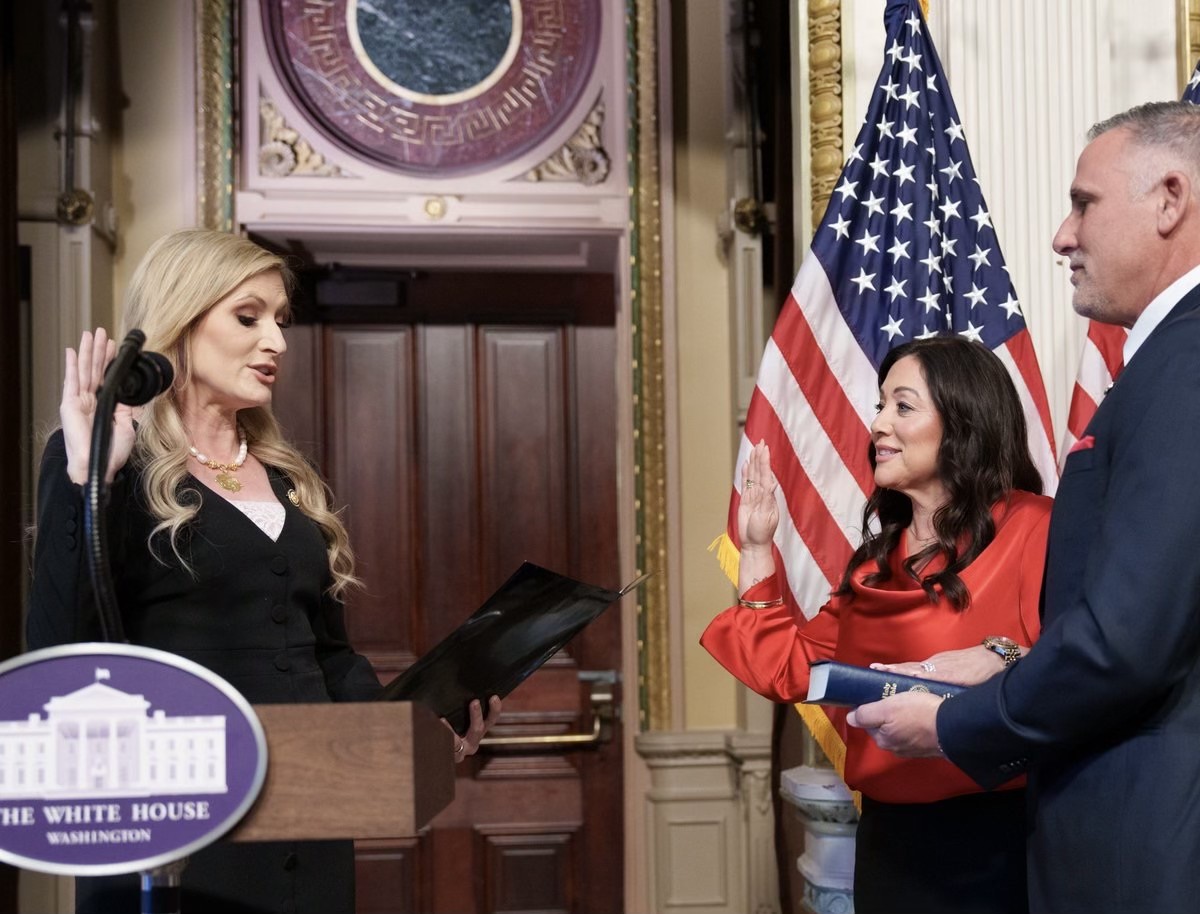
If you stay in Washington long enough, you will likely move from solely a servant to a supervisor. However, most of us will always serve someone - unless you end up at 1600 Pennsylvania Avenue, where you serve the entire nation and also God. In fact, this idea of service is embedded in the oath of office for government offices,
An individual, except the President, elected or appointed to an office of honor or profit in the civil service or uniformed services, shall take the following oath: "I, AB, do solemnly swear (or affirm) that I will support and defend the Constitution of the United States against all enemies, foreign and domestic; that I will bear true faith and allegiance to the same; that I take this obligation freely, without any mental reservation or purpose of evasion; and that I will well and faithfully discharge the duties of the office on which I am about to enter. So help me God." 5 USC Part III, Subpart B, Chapter 33, Subchapter II: §3331. Oath of office
I know many wonderful and godly members, appointees, and chiefs of staff. They use their power to mentor their staff and are eager to assist in equipping them for career growth. In the face of immense pressure and unending stress, their words create calm and offer encouragement. Sadly, I am also aware that demeaning and harsh language are not atypical for many offices in Washington. Neither is holding a person back and stifling their career in a particular job because they are too good to let them go.
Relational Discipleship Matters
Those serving in government operate in a world of uneven power differentials where relationships are a commodity often used for personal gain and advancing agendas. Relational discipleship is essential for working in our nation’s capital as Washington is a city built on relationships. This kind of discipleship includes a Biblical approach to conflict resolution, navigating workplace dynamics with uneven power differentials, and adopting a humble posture of service towards one’s neighbor regardless of which side of the power differential one is on.
Peter and Paul both address navigating relationships in their letters. Just as he did for the church in Galatia, Paul lays out an entire series of relational sins that adversely impact the shalom-seeking church in Colossae:
“Put to death therefore what is earthly in you: sexual immorality, impurity, passion, evil desire, and covetousness, which is idolatry. On account of these the wrath of God is coming. In these you too once walked, when you were living in them. But now you must put them all away: anger, wrath, malice, slander, and obscene talk from your mouth. Do not lie to one another, seeing that you have put off the old self with its practices and have put on the new self, which is being renewed in knowledge after the image of its creator.” Colossians 3:5-11
What was true for the churches of Asia Minor is true for those serving and leading in the public square.
There are, of course, other types of relationships. We shall attend to those next.
Application questions
As a supervisor or employer, in what areas does your leadership style resonate with the example of Jesus? In what areas does following the example of Jesus require changes in your leadership style?
Using the passage from Colossians 3:5-11, are there relational sins listed that are negatively impacting your leadership? In what situations do you find yourself succumbing to these works of the flesh? What steps can you take to diminish their power?
[Faithful Prayer]
Cabinet Agency: The servants and leaders at the Bureau of Indian Affairs (Interior) as they provide services directly or through contracts, grants, or compacts to 574 Federally recognized tribes with a service population of approximately 2.5 million American Indian and Alaska Natives.
Think Tank, Lobby group, NGO: The servants and leaders of the Inter-American Dialogue as they focus on five critical areas for the region’s future: promoting equitable relations between Asia and Latin America, enhancing education and skill development, advancing a just energy transition and climate action, fostering fair development for migrant communities, and supporting democracy, human rights, and the rule of law.
Weekly delegation: For the congressional delegation of the state of Massachusetts.
Agency News: The Office of Justice Services at the Bureau of Indian Affairs has “launched Operation Spirit Return, an initiative to help solve missing and unidentified person cases involving American Indians and Alaska Natives in the United States. The initiative is being conducted by the BIA's Missing and Murdered Unit to identify unknown human remains located within or close to Indian Country and are believed to belong to either American Indian or Alaska Native persons. The operation will focus on reuniting remains with family members and returning them to their tribal communities. The unit is actively investigating 15 unidentified persons cases from its regions, including Alaska.”
(1) For a couple having a very difficult time relating to each other. (2) For someone spending their first Easter without their spouse. (3) For someone recovering from surgery. (4) For someone struggling with immense job dissatisfaction after a long and enjoyable career. (5) For a couple on vacation with kids. (6) For a couple looking for new housing.
[The Page, The Pod & The Stack]
→ Read this first → The Rabbit Room Substack has a must-read from Jonathan Rogers, Flannery at 100, paying a beautiful homage to Flannery O’ Connor, a graduate of the Iowa Writers Workshop.
→ Listen to this first → This week’s Political Theater (Roll Call), which is always fun, is especially on point, as they dive into major league baseball’s opening week and the dissonance between diversity on the field and their fans, diversity within various sports’ fan base, March Madness, DEI as a national political conversation, how Sesame Street became part of the DOGE conversation, and the word of the week - OPSEC.
Religion and Liberty Online has a great take on one of the most popular shows for streaming that explores existential aspects of work-life balance, “Severance and the Bifurcated Self.”
The Gospel Coalition has an increasingly applicable essay, especially for those in the public square, When the Paychecks Stop: Spiritual Care for the Unemployed.
Christianity Today has a brilliant essay, Yesterday, Today, and Forever 21, that weaves together themes of culture, virtue-signaling, the prosperity gospel, and building a true faith.
Sojourners has a pointedly written essay from their president, Adam Russell Taylor, entitled, “I Underestimated the Religious Right.”
[What’s Happening?]
Tuesday, April 1, 11:00 am - 12:00 pm ET, the Cato Institute hosts a hybrid book event, Raised to Obey: The Rise and Spread of Mass Education.
Wednesday, April 2, 1:00 PM The Roosevelt Institute’s Book Club presents a virtual event: The Master’s Tools: How Finance Wrecked Democracy (And a Radical Plan to Rebuild It) with Michael A. McCarthy.
Wednesday, April 2, 5:00 - 6:00 pm ET, the American Enterprise Institute hosts a hybrid event, A Conversation with Senator James Lankford on His New Book, “Turnaround: America’s Revival.”
Thursday, April 3, 9:30 - 11:00 am ET, the Brookings Institute hosts Trump’s reciprocal tariffs: What are they? How will they work?
Friday, April 4, 1:30 - 2:30 pm ET, The Trinity Forum hosts a virtual event, Faith and Foreign Aid: Insights from Christians, an Online Conversation.
Saturday - Sunday, 11 AM – 6 PM is the Mosaic Art Blooms Festival. As part of the National Cherry Blossom Festival and in collaboration with URBNmarket and FRESHFARM, Mosaic transforms into a lively outdoor festival featuring over 110+ handmade and vintage vendors from URBNmarket. Fresh produce and treats from FRESHFARM’s 60+ local vendors. Family-friendly activities include a kids’ game corner, a petting zoo, cherry blossom-inspired arts and crafts, face painting, and painting stations. Live performances will take center stage on Strawberry Lane, featuring local bands/artists.
[Two Thumbs Up] Flannery O’Connor, The Complete Stories (1971)
This past week, Flannery O’Connor would have turned 100. Sadly, she passed away in 1964 at the young age of 39 from complications of lupus. As a devout Christian and Catholic, O’Connor left the Iowa Writer’s Workshop and turned the literary world upside down by writing about racism, incest, murder, abject poverty, and illiteracy in a way that gave all the characters depth and dignity. Her stories turned cultural conversations into theological conversations that continue into the present. No topic or word was off the table for her as she sought to wed the gothic to the authentic in literary style. Before her death, she wrote some of the greatest short stories ever written, including: A Good Man is Hard to Find, in which a Southern family of six traveling on vacation is murdered by an escaped convict. In 1972, The Complete Stories won the National Book Award and is widely considered to be the greatest collection of fiction in American history.

[Last Things]
If you enjoy this newsletter, please share it with a friend. If you want to join a Bible study, discipleship cohort, or reading group, please get in touch!
Faithful Presence exists to provide whole-life discipleship in the whole of life for the whole of the public square. Join us as we seek renewal in politics and the public square by becoming a Supporting Partner.
Find Us On: LinkedIn | Instagram | Facebook | X | YouTube | Apple & Spotify