
1 Peter 2:18-25 (1 of 3) Cultural Issues and the Importance of Pastoral Guidance.

[First Things]
Please let us know if you are interested in joining an in-person Washington discipleship cohort or reading group, have a pastoral concern, or are interested in our resources for churches.
[The Devo] Servants, Slaves, and Pastoral Silence
Servants, be subject to your masters with all respect, not only to the good and gentle but also to the unjust. or this is a gracious thing, when, mindful of God, one endures sorrows while suffering unjustly. For what credit is it if, when you sin and are beaten for it, you endure? But if when you do good and suffer for it you endure, this is a gracious thing in the sight of God. For to this you have been called, because Christ also suffered for you, leaving you an example, so that you might follow in his steps. He committed no sin, neither was deceit found in his mouth. When he was reviled, he did not revile in return; when he suffered, he did not threaten, but continued entrusting himself to him who judges justly. He himself bore our sins in his body on the tree, that we might die to sin and live to righteousness. By his wounds you have been healed. For you were straying like sheep, but have now returned to the Shepherd and Overseer of your souls. 1 Peter 2:18-25
As we have previously established, in discussing the power differential between these two categories of people, we must do so by paying attention to and distinguishing between the context in which Peter addressed his letter and our present setting. While the relationship between servants and masters is not the same as that between staff and bosses, there is much pastoral help here for living differently as elect-exiles in a manner that offers foretastes of the Kingdom of God to those we encounter.
The Elephant in the Room
Today, issues found in the “house tables,” along with modern sexual ethics, are chief among the reasons people give for rejecting Christianity. These objections are often called “defeaters.” Tim Keller, who wrote extensively on the concept of defeaters to the Christian faith, addresses this issue of slavery head-on,
When I first came to New York City almost twenty years ago, the main problem people had with the Bible was in the areas just discussed - science and history. Today, things have shifted somewhat. I find more people now especially upset by what they call the outmoded and regressive teaching of the Bible. It seems to support slavery and the subjugation of women. These positions appear so outrageous to contemporary people that they have trouble accepting any other parts of the Bible's message.
In the early days of Redeemer [the church Dr. Keller planted in Manhattan], I spent a lot of time with people who were reading the Bible for the first time. As a result, I was constantly responding to people who were choking on some particularly indigestible verse. I remember one black-clad young artist who came up to me after a service. He had just discovered the verse "slaves obey your masters" (Ephesians 6:5ff.) and was almost apoplectic. Here's how I advised him and other people on how to deal with a Scripture text that appeared objectionable or offensive to them.
Many people simply run viscerally from any consideration of the Bible once they find such a Biblical passage. I counsel them instead to slow down and try out several different perspectives on the issues that trouble them. That way they can continue to read, learn, and profit from the Bible even as they continue to wrestle with some of its concepts.
One possibility I urge them to consider is that the passage that bothers them might not teach what it appears to them to be teaching. Many of the texts people find offensive can be cleared up with a decent commentary that puts the issue into historical context. Take the text "slaves obey your masters." The average reader today immediately and understandably thinks of the African slave trade of the eighteenth and nineteenth centuries, or of the human trafficking and sexual slavery practiced in many places today. We then interpret the texts to teach that such slavery is permissible, even desirable.
This is a classic case of ignoring the cultural and historical distance between us, the writer, and the readers of the original text. In the first-century Roman empire, when the New Testament was written, there was not a great difference between slaves and the average free person. Slaves were not distinguishable from others by race, speech, or clothing. They looked and lived like most everyone else and were not segregated from the rest of society in any way. From a financial standpoint, slaves made the same wages as free laborers, and therefore were not usually poor. Also, slaves could accrue enough personal capital to buy themselves out. Most important of all, very few slaves were slaves for life. Most could reasonably hope to be manumitted within ten or fifteen years, or by their late thirties at the latest.
By contrast, New World slavery was much more systematically and homogeneously brutal. It was "chattel" slavery, in which the slave's whole person was the property of the master-he, or she could be raped or maimed, or killed at the will of the owner. In the older bond-service or indentured servanthood, only slaves' productivity their time and skills - were owned by the master, and only temporarily. African slavery, however, was race-based, and its default mode was slavery for life. Also, the African slave trade was begun and resourced through kidnapping. The Bible unconditionally condemns kidnapping and trafficking in slaves (1 Timothy 1:9-11; cf. Deuteronomy 24:7). Therefore, while the early Christians did not go on a campaign to abolish first-century slavery completely, later Christians did so when faced with New World-style slavery, which could not be squared in any way with Biblical teaching.
Some texts may not teach what they at first appear to teach. Some people, however, have studied particular Biblical texts carefully and come to understand what they teach, and yet they still find them outrageous and regressive. What should they do then?
I urge people to consider that their problem with some texts might be based on an unexamined belief in the superiority of their historical moment over all others. We must not universalize our time any more than we should universalize our culture. Think of the implication of the very term "regressive." To reject the Bible as regressive is to assume that you have now arrived at the ultimate historic moment, from which all that is regressive and progressive can be discerned. That belief is surely as narrow and exclusive as the views in the Bible you regard as offensive.” (Keller, The Reason for God, 109-111)
The Importance of Speaking
As we begin our conversation on dealing with power differentials in work relationships, it’s important to clarify the difference between servants (bondservants) and slaves. The situation addressed by Peter and Paul in Ephesians and Colossians is one of extreme power differentials with no legal or social standing today. Yet, it existed then and required their pastoral attention. Peter and Paul understood this cultural reality and confronted the issue directly without endorsing it or ignoring it.
Paul echoes the words of Peter to the church at Ephesus:
Bondservants, obey your earthly masters with fear and trembling, with a sincere heart, as you would Christ, not by the way of eye-service, as people-pleasers, but as bondservants of Christ, doing the will of God from the heart, rendering service with a good will as to the Lord and not to man, knowing that whatever good anyone does, this he will receive back from the Lord, whether he is a bondservant or is free. Masters, do the same to them, and stop your threatening, knowing that he who is both their Master and yours is in heaven, and that there is no partiality with him. Ephesians 6:5–9
Paul also took on the issue in his letter to the church at Colossae:
Bondservants, obey in everything those who are your earthly masters, not by way of eye-service, as people-pleasers, but with sincerity of heart, fearing the Lord. Whatever you do, work heartily, as for the Lord and not for men, knowing that from the Lord you will receive the inheritance as your reward. You are serving the Lord Christ. For the wrongdoer will be paid back for the wrong he has done, and there is no partiality.
Masters, treat your bondservants justly and fairly, knowing that you also have a Master in heaven. Colossians 3:21-4:1
For a more extended treatment of Paul’s thoughts on the first century’s legally protected economic system of bonded slavery, see his Letter to Philemon, a slave-owner to whom Paul had directed the fugitive Onesimus to return.
In contrast to the two prevailing approaches typically taken by pastors today, Peter and Paul spoke intentionally and pastorally to the recent converts to Christianity regarding the prominent issues of the day that defined life within the Roman Empire.
First, instead of ignoring a problem that most of his readers were involved in, either directly or once removed, Peter speaks to those on both sides of this power differential out loud and in a public hearing of the entire congregation. Second, rather than issuing a call to arms, which would have led to the loss of life for many Christians, they reinterpret the existing cultural paradigm through the lens of the gospel and the economy of God’s coming kingdom. Through this approach, people on either side of the servant-master power-differential are conformed to the image of Christ.
Application questions
In your experience, what current public square issues are pastors and church leaders ignoring? What current public square issues are used by pastors to radicalize and activate?
Why do you think motivates Christian leaders to embrace either approach? What are the implications of either ignoring or intensifying cultural issues?
[Faithful Prayer]
Cabinet Agency: The servants and leaders of the Social Security Administration who administer Supplemental Security Income (SSI), Retirement, Disability, Survivor, and Family benefits and enroll people in Medicare.
Think Tank, Lobby group, NGO: The American Association of People with Disabilities and their staff advocating for full civil rights for over 70 million Americans with disabilities by promoting equal opportunity, economic power, independent living, and political participation.
Weekly delegation: For the congressional delegation of the state of Kentucky.
Agency News: For all the agencies adjusting to staffing reductions and budget cuts through DOGE recommendations and the new Continuing Resolution budget agreement. For those working at the Internal Revenue Service who are in the thick of tax season.
Personal requests: For someone commuting long distances (by air) each week for work with a family still at home and kids in school. A couple hoping to get pregnant soon. A couple expecting their first child in late October. For someone facing shoulder reconstruction surgery following a skiing accident. For multiple individuals who simply do not have enough time in the day to accomplish their needed work. For a couple looking for a place to rent. Our President, Rev. Michael Langer, is traveling this week for speaking engagements in the Midwest.
[The Page, The Pod & The Stack]
→ Read this first → Comment Magazine’s newest issue includes an article entitled Biotechnology Against Privacy. The article addresses medical privacy and eugenics and seeks to transfer an essential conversation out of the domain of cultural darkness and into the kingdom of his beloved Son.
→ Listen to this first → The Knowing Faith Podcast recently released a discipleship-focused and workplace-relevant podcast, Mere Christian Hermeneutics with Kevin Vanhoozer, which dives deep into Dr. Van Hoozer’s new book, Cultural Hermeneutics.
The Washington Post has an in-depth story on a recent high-level meeting at the State Department with several high-profile faith-based NGOs regarding foreign aid.
AEI has a short but impactful op-ed from Robert George, Americans Should Not Be Fooled by Politicians Who Conveniently Change Their Tunes.
The New York Times has a read-worthy editorial by David Brooks, An Angry Little Boy on a Great White Horse.
[What’s Happening?]
Tuesday, March 18, 10:00 am to 12:00 pm ET, the American Enterprise Institute will host a virtual event titled Trump and the World Economy. This event will consider the impact that various policies might have on the world economy and discuss how the US economy might be affected by economic developments abroad.
Tuesday, March 18, 11:30 am - 12:30 pm ET, The Center for American Progress will host an in-person event, A Better Way Forward: A Conversation with Governor JB Pritzker, to discuss the future path for progressives.
Thursday, March 20, 6:30 pm - 7:30 pm, The Heritage Foundation will host a virtual event, Edwin Meese III Originalism Lecture: Originalism, the Administrative State, and the Clash of Political Theories.
Friday, March 21, 12:00 pm – 1:00 pm, Faith & Law’s Friday Forum will host an in-person event, Natural Law as a Basis for “Hopeful Realism” in Democratic Politics with Bryan McGraw, Jesse Covington, and Micah Watson.
Friday, March 21, 12:00 pm – 1:00 pm, The Cato Institute will host an in-person event, Cutting Corporate Welfare, arguing that President Trump and Congress should focus on spending reductions to counter exploding federal deficits and offset the budget impacts of extending tax cuts.
[Two Thumbs Up] The Bottom Line, Eye Street NW (Washington)
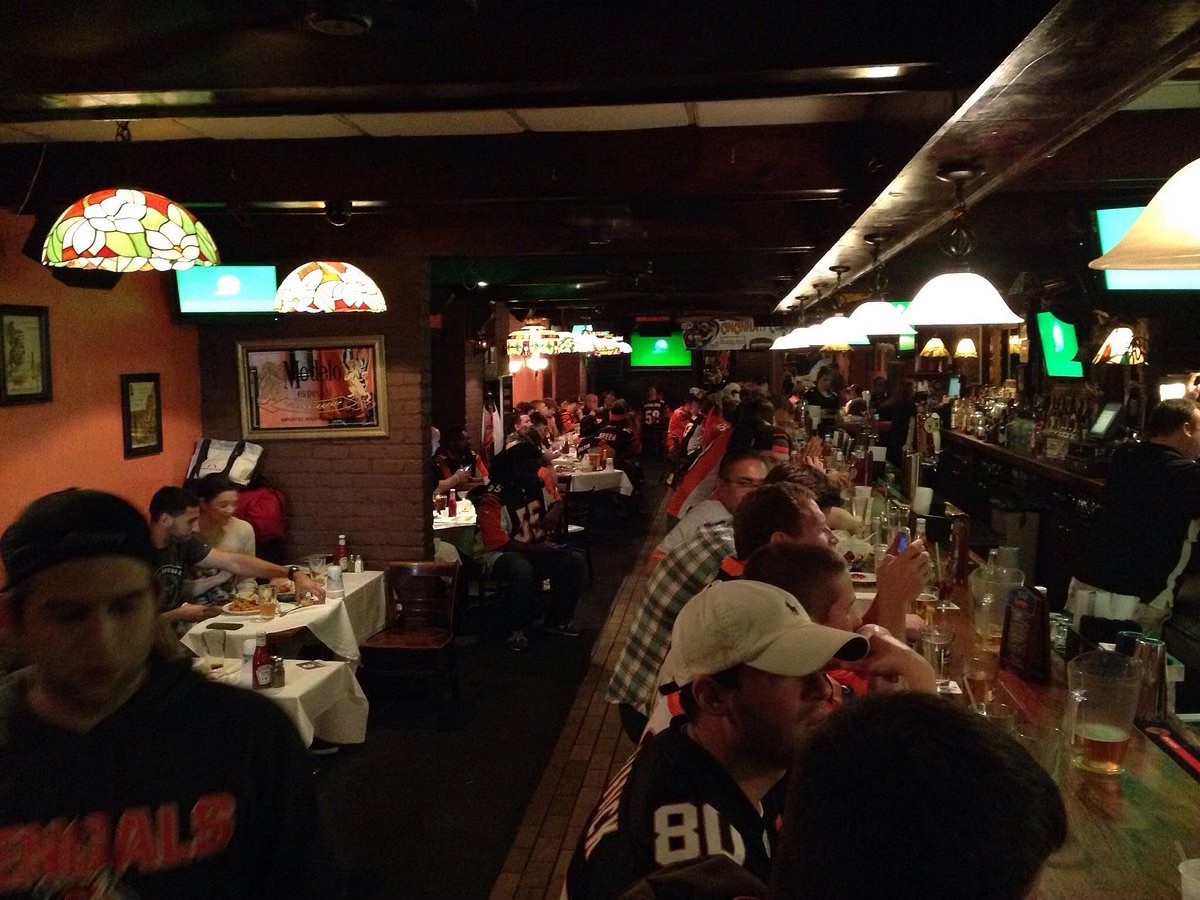
If you are feeling famished after that meeting at the White House, EEOB, or one of the many consulting firms surrounding, then it’s time to head over to Eye Street (aka I Street) and descend the stairs into an underground and iconic Washington D.C. tavern - The Bottom Line.
Since 1979, The Bottom Line has served up some of the best flame-broiled burgers in the nation’s capital. After sinking your teeth into their legendary House Burger, topped with sautéed mushrooms, sautéed onions, melted provolone cheese, and a side of bleu cheese dressing, you will understand why so many locals love this place. In addition to their burger menu, The Bottom Line’s French Onion Soup is worth multiple trips back.
Outdoor seating is available from spring through fall, but the real fun is inside the cozy confines of the gallery-style eatery, which has a full and friendly bar backed by someone who “knows what they are doing back there.”
One NFL game day nugget, The Bottom Line is also home to Washington’s Cincinnati Bengals fan club.
[Last Things]
If you enjoy this newsletter, please share it with a friend. If you want to join a Bible study, discipleship cohort, or reading group, please get in touch!
Faithful Presence exists to provide whole-life discipleship in the whole of life for the whole of the public square. Join us as we seek renewal in politics and the public square by becoming a Supporting Partner.
Find Us On: LinkedIn | Instagram | Facebook | X | YouTube | Apple & Spotify