
1 Peter 2:13-17 (2 of 3) On navigating the power differentials of the public square differently
[First Things]
On Friday, we released a Pastor’s Briefing on Foreign Aid, which examines how our ideological formation can be applied to a complex and divisive issue. We also have forthcoming podcasts on workplace evangelism, pro-life policy advocacy post-Dobbs, and how the Hispanic Christian community’s approach to the public square differs from that of white evangelicals.
[The Devo] Motivations for Life in the Public Square
“Be subject for the Lord’s sake to every human institution, whether it be to the emperor as supreme, or to governors as sent by him to punish those who do evil and to praise those who do good. For this is the will of God, that by doing good you should put to silence the ignorance of foolish people. Live as people who are free, not using your freedom as a cover-up for evil, but living as servants of God. Honor everyone. Love the brotherhood. Fear God. Honor the emperor.” 1 Peter 2:13-17
Motivation is a requirement for success in almost every aspect of life. Raw talent certainly plays a role in achieving our goals, but our gifts are underutilized without motivation. While the importance of motivation is easily established, one complicating obstacle to flourishing is often is the nature of our motivation.
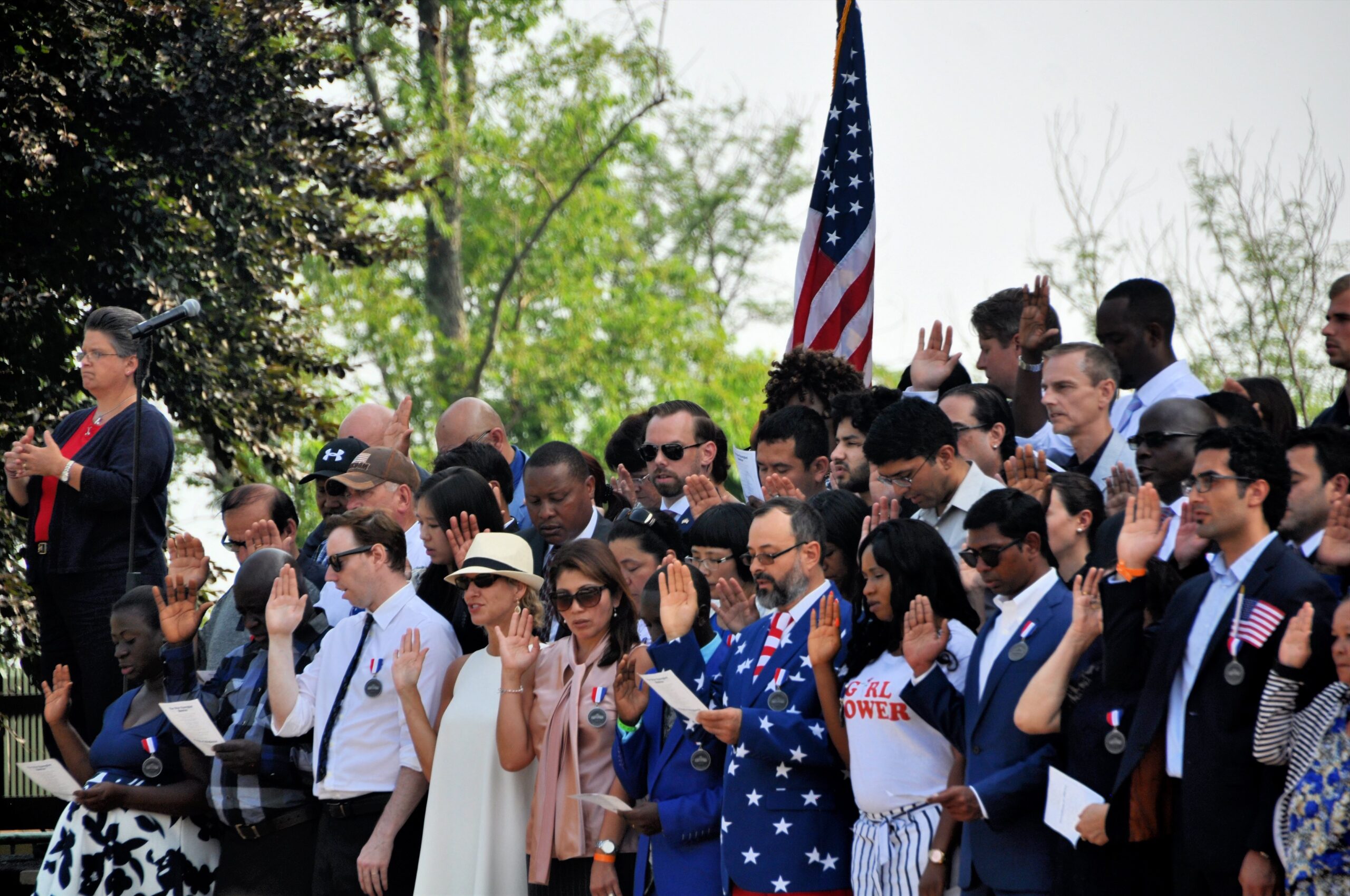
Motivation is often dependent upon the situation and the person. Immigrants may seek citizenship in the United States motivated by a desire for life, liberty, and the pursuit of happiness. Children may be motivated to get a job so they can have spending money. In more complicated situations, certain people may find motivation in a desire to gain recognition from colleagues or the public. Some may even find motivation in revenge or a desire to “stick it to the man.”
As we stated last week, Peter’s guidance is that living in a posture of faithful presence with the government should be marked by different attitudes, different motivations, and different methods. Knowing that people have situationally dependent motivations, Peter addresses the nature of motivation as it relates to adopting an attitude of faithful presence which includes being subject and living as people who are free.
While all citizens living within a nation are called to an attitude of “Being subject,” Peter intends to point his readers toward different motivations than everyone else. For those navigating the power differential of relating to “human institution,” he offers motivations not prone to damaging toxicity or insufficient empowerment to persevere.
Worship as Motivation
Peter’s response to the “Why?” of how we respond to the power differentials we experience with government is, “For the Lord’s sake.” Before we embrace what that does mean, we must begin by discarding what it does not mean. First, this cannot mean that things will go bad for the Lord if we do not behave ourselves as citizens. God is not dependent upon us for anything. Second, this also cannot mean that Peter is instructing his readers to worship Caesar alongside God as some form of culturally accommodating syncretism. The Ten Commandments start with, “You shall have no other gods before me” (Exodus 20:3) to clarify that God alone is to be worshiped. Rather, the apostle is stating the simple reality that, as Christians, our attitude of subjection to the government brings honor to God. Bringing glory and honor to God is the primary motivation that Peter asks his first-century readers to draw upon.
Paul says something unsurprisingly similar in the lead-up to his treatment of house tables in Colossians 3:12-17, stating the indicative of their identity before moving to the imperative of their mission:
Put on then, as God’s chosen ones, holy and beloved, compassionate hearts, kindness, humility, meekness, and patience, bearing with one another and, if one has a complaint against another, forgiving each other; as the Lord has forgiven you, so you also must forgive. And above all these put on love, which binds everything together in perfect harmony. And let the peace of Christ rule in your hearts, to which indeed you were called in one body. And be thankful. Let the word of Christ dwell in you richly, teaching and admonishing one another in all wisdom, singing psalms and hymns and spiritual songs, with thankfulness in your hearts to God. And whatever you do, in word or deed, do everything in the name of the Lord Jesus, giving thanks to God the Father through him.
Both men’s instruction grounds motivation in acting “for the Lord’s sake” and “in the name of the Lord.” In other words, obedience in the form of good citizenship is worship. Their reader’s existence on the weak side of the power differential was not likely to change within their lifetime. As we will see in the tenants of the house-table instructions for husbands and wives, masters and slaves, and other power differentials, the assumption is that these differentials are enduring. To maintain a faithful presence in “being subject” in an enduring power differential, people need motivation that provides perseverance. The motivation Peter recommends is bringing glory and honor to God.
Witness as Motivation
Peter spent three years as a disciple apparently motivated by a desire to convince Jesus that he was the best wingman the Son of God could ever ask for. Maybe he hoped to gain status in a movement he believed would soon be bursting at the seams. During that time, he had successes and failures. In many situations, Peter seemed motivated by outshining the other disciples. As much as Peter may have enjoyed the successes, the failures must have fueled eye-rolling from his fellow disciples and friends. Now, on the other side of the resurrection, leading an evangelical mission to new converts living among people who thought Christians were crazy losers but charged with the mission to “Feed my sheep,” Peter offers another motivation for enduring on the weak side of the power differentials - “putting to silence the ignorance of foolish people.”
The language here is similar to the previous passage in which Peter stated the overarching motivation for living in a posture of faithful presence as elect exiles and dual citizens of the Kingdom of God and the Kingdom of Rome is, at its core - evangelical. The motivation offered by Peter here is building upon, not replacing, the motivation of “so that” their action would bring people to glorify God when he returns.
Beloved, I urge you as sojourners and exiles to abstain from the passions of the flesh, which wage war against your soul. Keep your conduct among the Gentiles honorable, so that when they speak against you as evildoers, they may see your good deeds and glorify God on the day of visitation. 1 Peter 2:11–12.
This additional clarification, “to put to silence the ignorance of foolish people,” raises the question of who the foolish people are and what they are saying.
Why Motivations Matter Today
Christians living in the United States in 2025 have much more in common with the original readers than those living only a generation ago. Almost ten years ago, the book, “Good Faith: Being a Christian When Society Thinks You're Irrelevant and Extreme” (David Kinnaman and Gabe Lyons, Baker Books, 2016) revealed that most non-Christians have a decidedly negative view of Christians. As the subtitle suggests, we are seen as contributing to the problem rather than the solution.
Some of these perceptions come from the simple fact that, as our culture continues to unmoor itself from the Enlightenment and Christian virtues broadly accepted at our founding, Christian values are increasingly out-of-sync with the culture around us. We are experiencing the back side of what Peter’s readers experienced on the front end - a world whose values were premised upon an entirely different worldview.
In every age, the gospel is inherently offensive to skeptics all by itself. We are not culpable for the dissonance between our values and the world’s. What we are culpable for is our actions that lead people to conclude that we are irrelevant and extreme. When those perceptions come from our actual ignorance, disinterest, belligerence, or acting as self-appointed mercenaries intent on undermining the “human institutions” we find ourselves living under, Christians are called to repent and adopt a posture of faithful presence motivated by silencing the critics of our faith.
Because the public square is wherever we find ourselves talking about matters of policy and government, perhaps our modern-day calling is to understand the policy issues properly rather than allowing social media to form our opinions, enter into conversations with people of other political views with the motivation of having them believe that we care about them as people created in the image of God, and to find ways to work for the common good of your local neighborhood so that criticisms are outweighed by appreciation.
Some are motivated to engage in the public square as an institution. That includes running for office, working or volunteering at City Hall or the local VA hospital, proposing and advocating ordinance changes in their community, taking an appointment in a Cabinet agency, or working as a career civil servant motivated by “the Lord’s sake” and to “silence foolish people.”
What if our attitude as citizens was motivated by glorifying God and silencing foolish people rather than fighting the enemy or seeing our political goals for a New America achieved at whatever cost? What if our motivation was evangelical - to have more people glorify God?
If those were our motivations, it would undoubtedly affect our methods.
Application Questions
What is the most amazing thing you have ever accomplished? What was your motivation for pursuing that goal?
Are there specific initiatives within the public square you have a voice and agency in accomplishing? Consider all of the motivations driving your effort, then compare and contrast the current order of your motivations against what they should be as a Christian. How would your ability to accomplish your goals change if you reordered your motivations?
[Faithful Prayer]
Cabinet Agency: The servants and leaders of the U.S. Office of Special Counsel (OSC), an independent federal investigative and prosecutorial agency whose mission is to safeguard the merit system by protecting federal employees and applicants from prohibited personnel practices (PPPs), especially reprisal for whistleblowing.
Think Tank, Lobby group, NGO: The Ethics and Public Policy Center as they “work to apply the riches of the Jewish and Christian traditions to contemporary questions of law, culture, and politics in pursuit of America’s continued civic and cultural renewal.”
Weekly delegation: For the Congressional delegation of the state of Oklahoma.
Agency News: Staff at the United States Postal Service and the Commerce Department as they await a decision by the Trump Administration on placing the USPS under Commerce Department accountability. For staff at the Department of Health and Human Services (HHS), the National Institute of Health (NIH), and the Centers for Disease Control (CDC) as they work to mitigate the spread of the measles virus. For conversations at the State Department on foreign aid and ending the war in Ukraine.
Personal requests: For someone traveling on government business. For an agency executive working to comply with multiple requests for information and frequent changes in directives. For someone whose efforts on a critical and time-sensitive matter were not successful, which ended with dire consequences for some of the parties involved. For someone who was released from their senior-level advisory position on Friday. For someone advocating for homeless youth funding. For someone whose family is dealing with sickness, including a young child with pneumonia.
[The Page, The Pod & The Stack]
Read this first → First Things has an intriguing essay from Blake Johnson on “The Re-Churching of Men,” which dovetails nicely with the forthcoming event at The Heritage Foundation (see below) on the role of fathers.
Listen to this first → The Acton Institute has a sadly relevant talk by Dr. Anthony Bradley, “The Trauma of Poverty: Why Economic Empowerment Matters,” which unpacks childhood trauma's role in long-term flourishing.
The Dispatch also has an essay on the cultural moment men appear to be having right now, with the disco-referencing title, “Young Man, There’s No Need to Feel Down.”
The New York Times has an article, “One Nation, Under God,” forwarded to us by multiple folks in the Faithful Presence ministry orbit. The article interacts with some interesting new data on faith in our country.
The C.S. Lewis Institute has a relevant and pastoral piece entitled, C.S. Lewis and the Crisis of the Modern Self, by pastor Thiago M. Silva, Ph.D who does an excellent job weaving Carl Trueman’s work discussing our present view of what it means to be human.
[What’s Happening?]
Tuesday, March 4, 12:00 - 1:00 pm ET, The Heritage Foundation presents a virtual event, Dads on Duty: A Father’s Role in Shaping Society, to discuss “the essential role of fathers, the higher purpose of children in American society, and marriage as America's keystone institution.”
Wednesday, March 5, 1:30 - 4:00 pm ET, The Brookings Institute hosts a hybrid event on economic policy, USMCA Forward 2025 launch: Navigating North American trade amid global changes.
Thursday, March 6, 12 - 1:30 pm ET, The Cato Institute offers a hybrid event, Common Law Liberalism: A New Theory of the Libertarian Society, to discuss the understanding of “law” as used in the public square.
Friday, March 7, 12:00 – 1:00 pm ET, Faith & Law’s Friday Forum hosts an in-person event, Are Religion and Politics Indivisible? Models for Pluralist Democracies with Dr. Amy Black of Wheaton College.
Saturday, March 8, 12:00 - 2:00 pm ET, Rural Dog Rescue will hold a Dog Adoption Event at Steadfast Supply in The Yards neighborhood.
[Two Thumbs Up] Book: Practice Resurrection, Eugene Peterson (2001)
If Faithful Presence could afford to buy a copy of this book for every reader, we would do that immediately. Pastor Peterson passed away in 2018 after blessing the world with his translation of the entire Bible in The Message, a remarkable commentary on the Psalms of Ascent (Psalms 120-134) in A Long Obedience in the Same Direction, and a reasonably well-known collaboration with Bono. He always penned this gift to the church on discipleship, dedication, leadership, and living with the reality of our humanity.
In Practice Resurrection, Peterson uses the book of Ephesians to paint a picture of the church that is authentic, honest, open, and wholly focused on the gospel of Jesus Christ. This is not a book on how to do church better; it’s about how the church should look while they do the work of discipleship. The reader who wants a church that is neater, more well-ordered, flashy, or built for speed and growth is going to find themselves properly disappointed. This book is intended for pastors, church leaders, members, and even seekers and skeptics who are looking for a church that is not ashamed of how people really are and what they are actually struggling with. It is a book that presents the vision for the church as one committed to whole-life discipleship of every single person who comes through their doors because that is precisely what Christ intended for the church.
Don’t just take our word for it; Practice Resurrection won Christianity Today's 2011 award for best book in spirituality!
[Last Things]
If you enjoy this newsletter, please share it with a friend. If you want to join a Bible study, discipleship cohort, or reading group, please get in touch!
Faithful Presence exists to provide whole-life discipleship in the whole of life for the whole of the public square. Join us as we seek renewal in politics and the public square by becoming a Supporting Partner.
Find Us On: LinkedIn | Instagram | Facebook | X | YouTube | Apple & Spotify