
1 Peter 4:12-19 Suffering Differently (Part 3 of 3)
[First Things]
If you are in Washington, please let us know if you are interested in joining a 14-week discipleship cohort (meets 8 times) using our new 1 Peter: A Guide to Discipleship for the Public Square.
Our next podcast is with Dr. Anthony Bradley discussing his new Bible-study on the Book of Exodus, the role of trauma on flourishing, poverty alleviation, and the importance of discipleship.
Our upcoming Pastor’s Briefing will focus on discipleship lessons from the death of Charlie Kirk.
[THE DEVO] Christian Suffering Sets Our Hope on Christ
1 Peter 4:12-19 Suffering Differently (Part 3 of 3)
12 Beloved, do not be surprised at the fiery trial when it comes upon you to test you, as though something strange were happening to you. 13 But rejoice insofar as you share Christ’s sufferings, that you may also rejoice and be glad when his glory is revealed. 14 If you are insulted for the name of Christ, you are blessed, because the Spirit of glory and of God rests upon you. 15 But let none of you suffer as a murderer or a thief or an evildoer or as a meddler. 16 Yet if anyone suffers as a Christian, let him not be ashamed, but let him glorify God in that name. 17 For it is time for judgment to begin at the household of God; and if it begins with us, what will be the outcome for those who do not obey the gospel of God? 18 And“If the righteous is scarcely saved, what will become of the ungodly and the sinner?” And if the righteous are being saved with difficulty, where will the ungodly and the sinner appear? 19 Therefore, let those who suffer according to God’s will entrust their souls to a faithful Creator while doing good.” 1 Peter 4:12-19
Star Wars IV: A New Hope premiered in 1977, telling the epic saga of the rebellion against the Empire and Darth Vader. In one of the most iconic moments of movie history, we see and hear Princess Leia explaining the dire situation of the rebellion and proclaiming, “Help us, Obi-Wan. You’re our only hope.” The Star Wars saga unfolded over 9 films, but started with Episode 4. To be sure, Star Wars is not a Christian allegory, but it does help us get a sense of what happens when we begin reading the Bible in the middle of the story - with the Gospels
The opening chapter of the Gospel of Mark begins by telling us that Jesus came with the intent of calling people out of darkness and into his marvelous light,
14 Now after John was arrested, Jesus came into Galilee, proclaiming the gospel of God, 15 and saying, “The time is fulfilled, and the kingdom of God is at hand; repent and believe in the gospel.” Mark 1:14-15
Yet, Mark closes that same gospel by writing,
19 So then the Lord Jesus, after he had spoken to them, was taken up into heaven and sat down at the right hand of God. 20 And they went out and preached everywhere, while the Lord worked with them and confirmed the message by accompanying signs. Mark 16:19–20
The kingdom of God does not seem to have come as they expected. Many, including Peter, were initially operating under the impression that when Jesus said, “The time is fulfilled. The kingdom of God is at hand,” he meant that he was going to set up his kingdom on earth, then, not later, stay there with them, and rule forever from the throne of David. Further, the full arrival of this kingdom would certainly mean an end to all their oppression and suffering, not the catalyst for more oppression and suffering. The purpose of this letter is to recalibrate their expectations of the coming Kingdom, the place of suffering, and the importance of their living hope.
A Long History of Suffering
In the same curse that evicted Adam and Eve from the Garden, God promised a deliverer who would end all the suffering,
“I will put enmity between you and the woman,
and between your offspring and her offspring;
he shall bruise your head, and you shall bruise his heel.” Genesis 3:15
While waiting, the God people struggled with all manner of sins that impacted them emotionally, relationally, vocationally, and culturally. They suffered through 400 years of slavery in Egypt before God rescued them through Moses, only to spend 40 years suffering in the wilderness. They suffered through the conquest of the Promised Land, only to suffer through losing it due to their recurring disregard for the clear instructions of God in how to live until his return. Then, suffering came through the destruction of Jerusalem and seventy years of Babylon. Once freed, they suffered through the rebuilding of the city and the second Temple, which was an embarrassing replacement for the first. This was followed by suffering from various oppressors, which eventually resulted in suffering at the hands of Roman rule.
Finally, Jesus entered the picture, proclaiming that the kingdom of God was at hand and backing up his claim with miracles over every aspect of the Fall. Yet, somehow, as always seems to happen for the elect people of God, defeat appeared to be snatched from the jaws of victory. This is the audience Peter is addressing, and it is the same one in which we find ourselves.
The Lure of Ending Our Suffering
If we are honest, we admit that we are drawn to becoming the agents of our own rescue. The public square provides both an opportunity to encourage the good, restore the broken, create the missing, and oppose the evil in ways that are in line with participating in Christi’s mission of making all things new and seeking the flourishing of the place that God has placed us. The trouble comes when we elevate the political mission to Make America Great Again or Build Back Better over Christ’s mission of making all things new. Notice that in two of these mission statements, the work of accomplishing the goal depends entirely on the servants and leaders who have committed themselves to the cause.
As stated before, when engaging with the public square, there is a constant lure to place our hope in our agency and not in the promises of Christ - the belief that we need to bring about the end of our suffering places us as the agents of our redemption rather than Christ. Therefore, there is a critical distinction between understanding our participation in Christ’s mission of making all things new through employing the four questions of faithful presence as a means of offering foretastes of the coming kingdom, versus believing that it is our responsibility to change the world. This brings us to the point Peter has been working to make throughout his letter to the elect exiles: Christian suffering sets our hope in Christ.
When suffering comes, it seems as though the entire world is collapsing in on you. Our perspective is blurred, and we lose sight of what is actually happening. Further, in suffering, we often find ourselves so fully in that moment that we are unable to imagine any other life. This is where Peter seeks to “Feed His Sheep.” He writes in verse 12 that this (Christian) suffering “has been brought to test you.” In this, we are told that not only is our suffering not random, but it has in some real sense been brought to us by our Father, who we can trust because he is faithful to his promises.
The Enduring Power of Hope
In our suffering, we have something that those outside of Christ do not have: hope. This passage is one filled with hope for the believer and an offer of hope for the unbeliever.
17 For it is time for judgment to begin at the household of God; and if it begins with us, what will be the outcome for those who do not obey the gospel of God? 18 And if the righteous is scarcely saved, what will become of the ungodly and the sinner?” 19 Therefore, let those who suffer according to God’s will entrust their souls to a faithful Creator while doing good.”
Peter says that judgment begins with the household of God, but, because Christ died to pay the penalty for our sins and lack of obedience, the most palpable aspect of that judgment is the suffering we experience in this life. The question beyond “the household of God” is, what will happen to those who do not obey the “gospel of God” and who have not put their faith and trust in Christ?
Where Peter says that if the righteous are scarcely saved, it might be better to translate that, “And if the righteous are being saved with difficulty, where will the ungodly and the sinner appear?” It is saying, I believe, that since the only way the righteous were saved was through Christ, what will happen to those who are not in Christ? In other words, the present judgment of God’s people by others is nothing compared to the future judgment of pagans by God.
Sometimes, the suffering we are experiencing will not end while we are on this earth. The spouse who cheated on you may never apologize, the boss who passed you over for the raise may never make good on it, the pastor who wounded you at your last church, or even your current church, may never get the depth of the damage that he did, and the cancer you are praying would spare your child, may take their life. God’s answer to your prayers may be, “No.” Many of us are living this reality right now. For many, the problem of evil and unjust suffering undermines their faith. But this is where Peter wants to take them because the gospel provides us with a living hope.
There are two options for facing unwanted and unjust suffering: hold onto that baggage of bitterness or set your hope fully on Christ in the midst of your suffering and know that Christ has already achieved your exoneration. In the midst of our suffering, sometimes the hope of Christ’s return and the consummation of his missional declaration, “Behold, I am making all things new,” is all that we have until Jesus returns. The full context of Jesus’ declaration is helpful,
21 Then I saw a new heaven and a new earth, for the first heaven and the first earth had passed away, and the sea was no more. 2 And I saw the holy city, new Jerusalem, coming down out of heaven from God, prepared as a bride adorned for her husband. 3 And I heard a loud voice from the throne saying, “Behold, the dwelling place of God is with man. He will dwell with them, and they will be his people, and God himself will be with them as their God. 4 He will wipe away every tear from their eyes, and death shall be no more, neither shall there be mourning, nor crying, nor pain anymore, for the former things have passed away.”
5 And he who was seated on the throne said, “Behold, I am making all things new. Revelation 21:1–5.
Notice that leading up to Christ’s declaration of his mission is an acknowledgment of the unwanted and unjust sufferings of this earth and the promise that those will all be gone, forever, in the world which is coming.
Through our suffering, we have hope. C.S. Lewis wrote in his book A Grief Observed,
“You never know how much you really believe anything until its truth or falsehood becomes a matter of life and death to you. It is easy to say you believe a rope to be strong and sound as long as you are merely using it to cord a box. But suppose you had to hang by that rope over a precipice. Wouldn't you then first discover how much you really trusted it?”
The most comforting word in this entire passage, and the key to suffering differently, is perhaps the first, “Beloved.” Knowing that the God who has ordained this suffering for us loves us dearly, and identifies with us through the suffering of his beloved Son, now proposes to use our suffering to identify us with his Son, conform us to his Son, and to fully set our hope in his Son.
When we are no longer surprised by suffering as something that we should not be experiencing, and even come to actually expect unjust suffering, we are not only able to endure suffering, but to suffer differently. This is the gift that Christian suffering provides: a living hope in the midst of suffering, a living hope that leads to rejoicing both now and when his full glory is revealed. God uses our suffering to burn away everything else that we cling to so that we will, instead, cling to the only thing that truly will get us through the suffering, no matter how long it lasts.
Application questions
How does the possibility of public shame affect your decision-making process at work? How does altering that process impact your Christian witness?
How have you been refined (strengthened) through past suffering? How has this refining (strengthening) impacted your life as a Christian? How has it impacted your roles as a servant or leader in the public square?
[Faithful Prayer]
Cabinet Agency: The servants and leaders at the Department of Justice, in their mission to uphold the rule of law, to keep our country safe, and to protect civil rights, in light of the new Washington, D.C. justice reform package that was passed by the House.
Think Tank, Lobby group, NGO: The Brennan Center for Justice, as they work to build an America that is democratic, just, and free for all.
Weekly delegation: The servants and leaders accompany the congressional delegation of Illinois as they respond to the growing wave of protests over immigration enforcement in the Chicago area.
News events: The House voted on Tuesday, September 16, to allow 14-year-olds to be tried as adults for serious crimes as a part of a Washington, D.C. Justice Reform package.
Personal requests: For the families of everyone who is mourning the loss of a loved one. For a couple who just found out they are pregnant with their third child. For a couple expecting their first. For a senior staff member of a committee continuing to work on important and technical language for an important piece of legislation. For a senior agency official who is travelling this week to represent the interests of the United States. For someone trying to manage their ADD while serving at a high-level position in Washington. For a couple working on fixing up a house they recently purchased.
[The Page, The Pod & The Stack]
READ this FIRST → Dr. Kevin Brown, president of Asbury University, authored an insightful and inspiring article in Comment exploring how a durable and meaningful identity is not inwardly self-created, but rather grounded in relationships, responsibilities, traditions, and community.
LISTEN to this FIRST → First Things episode of While We’re At It, featuring TN Representative Cameron Sexton on Faith in State Politics.
READ this NEXT →Dr. James Wood penned this article from Mere Orthodoxy, examining Augustine’s teachings on vengeance and retaliation, and relates it to how we ought to respond to the death of Charlie Kirk.
Acton Institute’s affiliate scholar, Marvin Olasky, published this stimulating article on how personal mentorship and hands-on learning offer lessons for education, as well as baseball, which cannot be fully replaced by AI or analytics.
The Center for Pastor Theologians published this thoughtful article by Dr. Andrew Williams using Tolkien’s tale of Númenor to illustrate how pride, exceptionalism, and the refusal to accept human limits can bring down even the greatest civilizations.
[What’s Happening?]
This Week
Monday, September 22, 10:00 am - 11:00 am EDT, Brookings Institution is hosting the president and chief executive officer of the Federal Reserve Bank of St Louis, Alberto Musalem, for a hybrid event to share his thoughts on the trajectory of the U.S. economy and monetary policy.
Wednesday, September 24, 2:00 pm to 3:00 pm EDT, the Bipartisan Policy Center is hosting a hybrid event, Gaming Out the GSEs’ Exit from Conservatorship: Process, Policy, and Potential Pitfalls to discuss potential exit strategies, likely challenges, the potential timeline for action, and the implications of ending of the conservatorship of Fannie Mae and Freddie Mac—for mortgage markets, the federal budget, and the broader economy.
Thursday, September 25, 5:30 pm - 8:00 pm EDT, the Urban Institute has a hybrid event, Untangling a Complex Problem: Preserving Housing Wealth for Vulnerable Owners through Technology and Estate Planning, to discuss the importance of estate planning as a wealth preservation tool, the opportunities presented by adopting technology, and the potential challenges, particularly as deeper technological penetration might intersect with the digital divide.
Friday, September 26, 1:30 pm - 2:30 pm EDT, The Trinity Forum hosts William Inboden in an online event exploring the roles of education, community, and faith in forming wisdom, integrity, and the development of character.
Saturday, September 27, 10:30 am - 8:00 pm EDT, in Woodville, VA, the John Jackson Piedmont Blues Festival will be paying tribute to Rappahannock native, John Jackson himself, with performances, food vendors, historical displays, and educational demonstrations.
Next week
Monday, September 29, 10:30 am - 12:00 pm EDT, Brookings is hosting a hybrid event on the Pursuit of Purpose in the age of AI.
Tuesday, September 30, 2:00 pm - 4:00 pm EDT, The Urban Institute is hosting an in-person event that will focus on the financial health and well-being of young adults in America.
Thursday, October 2, 12:00 pm - 1:00 pm EDT, The Heritage Foundation is hosting a virtual preview of the upcoming Supreme Court 2025-2026 term featuring Zach Smith, James Burham, and Chad Squitieri.
Thursday, October 2, 5:00 pm - 7:00 pm EDT, The Center for Public Justice will host their 28th annual Kuyper Lecture in-person, featuring Gert-Jan Segers, former member of the Dutch Parliament, speaking on How Faith Can Save Government of, by and for the People.
Saturday, October 4, 11:00 am - 7:00 pm EDT, Vienna is jumping into October by hosting its Oktoberfest! There will be beer, wine, food, entertainment, and activities for kids and families.
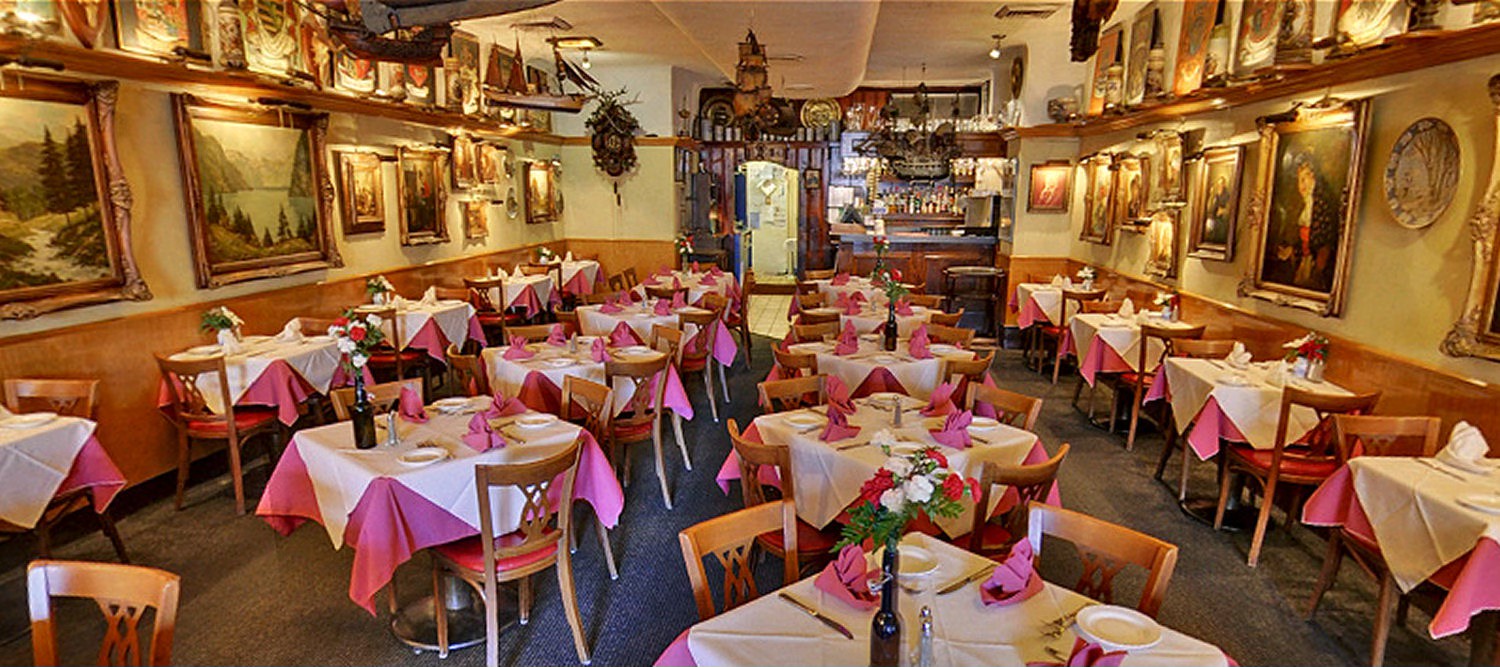
[Two Thumbs Up!] Old Europe, Washington, D.C.
Looking for a Bavarian-style German restaurant and tavern that knows a thing or two about celebrating Oktoberfest in Washington, D.C? Well, then, head on over to Old Europe. Tucked away, but well-known, in Glover Park, it feels like an old-world away. The "Old World" vibe is not subtle here - from cozy lighting and wood paneling to the genuine cuckoo clock and friendly staff in traditional dirndls. It's the perfect spot for a celebratory dinner or a comforting meal on a chilly night, especially in the fall, and even more so when they have live music.
The food is as authentic as the ambiance. I’m a fan of the classic Wiener Schnitzel, which is perfectly breaded and crispy. If you are avoiding fried foods, the hearty sausage platter with its variety of house-made sausages and tangy sauerkraut is a great choice for sharing. But you really should try the Deutscher Hackbraten - a German-style meatloaf topped with dark beer gravy and sauteed onions and served with potato dumpling and apple red cabbage. What about dessert? Oh yes, oh yes, oh yes! The German Chocolate Cake is amazing.
The beer selection is fantastic year-round, but it's especially robust during Oktoberfest celebrations. In addition to their dining room, Old Europe also offers an upstairs banquet room and a downstairs Rathskeller.
[Last Things]
If you enjoy this newsletter, please share it with a friend. If you want to join a Bible study, discipleship cohort, or reading group, please get in touch!
Faithful Presence exists to provide whole-life discipleship in the whole of life for the whole of the public square. Join us as we seek renewal in politics and the public square by becoming a Supporting Partner.
Find Us On: LinkedIn | Instagram | Facebook | X | YouTube | Apple & Spotify