
[First Things]
Greetings and welcome to the Presence Weekly! Each Presence Weekly features a long-form devotional aimed at servants and leaders in the public square. It also contains a prayer guide, articles you may have missed, events calendar, and a review on movies, shows, music, books, or places to dine.
As we continue through the Sermon on the Mount, this week’s devotional passage is entitled The Paradox of Persecution and focuses on the final three verses of the Beatitudes,
10 “Blessed are those who are persecuted for righteousness’ sake, for theirs is the kingdom of heaven.
11 “Blessed are you when others revile you and persecute you and utter all kinds of evil against you falsely on my account. 12 Rejoice and be glad, for your reward is great in heaven, for so they persecuted the prophets who were before you.
The verses, of course, are difficult to swallow for anyone who plans to follow Jesus while serving and leading in the public square.
[The Devo]
The Paradox of Persecution
The Sermon on the Mount
5 Seeing the crowds, he went up on the mountain, and when he sat down, his disciples came to him.
The Beatitudes
2 And he opened his mouth and taught them, saying:
3 “Blessed are the poor in spirit, for theirs is the kingdom of heaven.
4 “Blessed are those who mourn, for they shall be comforted.
5 “Blessed are the meek, for they shall inherit the earth.
6 “Blessed are those who hunger and thirst for righteousness, for they shall be satisfied.
7 “Blessed are the merciful, for they shall receive mercy.
8 “Blessed are the pure in heart, for they shall see God.
9 “Blessed are the peacemakers, for they shall be called sons of God.
10 “Blessed are those who are persecuted for righteousness’ sake, for theirs is the kingdom of heaven.
11 “Blessed are you when others revile you and persecute you and utter all kinds of evil against you falsely on my account. 12 Rejoice and be glad, for your reward is great in heaven, for so they persecuted the prophets who were before you.
Persecution and Virtue
Consider, for a moment, the crowds listening to Jesus. According to Matthew’s telling, Jesus is about two minutes into his message on the virtues of the kingdom that bring true flourishing and the good life that God intends for his people. Some may have felt dissonance with Jesus declaring that “blessed are the poor in spirit, those who mourn, and the meek.” Others may have resonated with “blessed are those who hunger and thirst for righteousness, the merciful, the pure in heart, and the peacemakers” because those sounded like virtues any good person would pursue.
Then, as his disciples and others in the crowds are trying to make sense of how Jesus is reapplying much of the “Blessed” language of the Psalms, and some are even hearing echoes of Greek commendations of virtues that lead to the good life, the Rabbi with miraculous powers of healing says,
10 “Blessed are those who are persecuted for righteousness’ sake, for theirs is the kingdom of heaven.
11 “Blessed are you when others revile you and persecute you and utter all kinds of evil against you falsely on my account. 12 Rejoice and be glad, for your reward is great in heaven, for so they persecuted the prophets who were before you.
With those words, Jesus blasts a hole the size of the gospel through their understanding of what comes from virtuous living. Those who were contemplating the costs of following Jesus in a context of intense religious and political oppression and polarization are hearing that to truly follow Jesus is to expect persecution. If Jesus were trying to win friends and influence people, this was certainly not the recipe he needed to follow. But Jesus is trying to do something far more important, and much harder — he was gathering and building disciples. Disciples who follow the path of righteousness which Jesus is laying before them must also be prepared for persecution, or their faithful presence could quickly turn into radicalization or withdrawal.
Therefore, if enduring persecution is critical to righteousness, then understanding persecution is also critical.
Persecution and Provocation
What, exactly, is persecution? Jesus, himself, answers the question twice. It is “for righteousness’ sake, for theirs is the kingdom of heaven” and “on my account.”
Persecution is the acts and actions of others, towards his followers, for their righteous behavior and their allegiance to him. Persecution can take the form of speaking “all kinds of evil against you falsely,” in the form of lying, slander, and malicious gossip. It might involve plotting against someone, intentionally passing them over for a promotion or raise, putting them in a position to fail, not giving them needed support, mocking them in private or even publicly, isolating them, and bullying. In extreme cases it might mean false accusations that could lead to firing, lawsuits, arrest, physical harm, or even death.
However, persecution is not what happens as a result of intentional behavior designed to provoke a response by shouting the Bible at people, or as a result of someone’s belligerence, pompousness, tone-deafness, hypocrisy, judgmentalism, or misogyny. Persecution is also not the response to racist, sexist, or even hate-filled comments directed at others. Nor is the response to incompetence rightly subsumed fully under persecution because incompetence is not a trait of following Jesus. Being dismissed from a position when you cannot fulfill the lawful duties of that job because of your personal beliefs is not always persecution; it may just be that you cannot fulfill the role you were hired for. The response of others to such provocations may be inordinate or even sinful, but persecution is not a proper category for responses to provocative actions that bring suffering to the one who provoked them.
Peter makes this clear when he writes to the church in Asia Minor,
For this is a gracious thing, when, mindful of God, one endures sorrows while suffering unjustly. For what credit is it if, when you sin and are beaten for it, you endure? But if when you do good and suffer for it you endure, this is a gracious thing in the sight of God. For to this you have been called, because Christ also suffered for you, leaving you an example, so that you might follow in his steps. 1 Peter 2:19–21
As Jesus frames it, persecution is unjust suffering for their belief and behavior that will come from following him. Persecution is not something anyone should want, invite, encourage, or enjoy. But, thankfully, because God works good for all those who love him (Romans 8:28), it is also not without meaning or even benefit.
Persecution Reveals the Church
Notice that in the repetition, something important changes. In verse 10, Jesus says, “Blessed are those […],” but in the next verse he says, “Blessed are you […].”
For the first time, Jesus personalizes his teaching. He is not talking about someone identified by some virtue; he is talking about “you.” The audience would have certainly caught this shift from the third person to the second person. Further, and equally importantly, Jesus is not speaking in the second person singular, but in the second person plural — known in the South as y’all.
In our cultural climate, we tend to focus on the individual rather than the group. This problem is exacerbated when reading Scripture in English that does not have a second person plural because our default is to read the “you” as always meaning “me.” But this was not an obstacle the crowds would have faced. The Jewish audience was well-versed in understanding the calls to obedience as individual and corporate because they understood the meaning of the people of God.
The people of God were in slavery together, they were rescued together, they were given the Ten Commandments together, they were instructed that all of life is worship together, they were set apart as a people together, they were placed in the Promised Land, and they went into exile together. Throughout the Old Testament, the people of God were taught that their beliefs and behaviors both set them apart from others so that they could be a blessing to others and to draw more people into their community of worshiping the one true God.
The Apostle John builds on this corporate identity of association when he records the words of Jesus in a later setting,
If the world hates you, know that it has hated me before it hated you. If you were of the world, the world would love you as its own; but because you are not of the world, but I chose you out of the world, therefore the world hates you. Remember the word that I said to you: ‘A servant is not greater than his master.’ If they persecuted me, they will persecute you. If they kept my word, they will also keep yours. But all these things they will do to you on account of my name, because they do not know him who sent me. John 15:18–21
Persecution, then, serves, in part, to reveal the church, because the world learns what we believe by watching what we are willing to suffer for. It is not the difference itself that matters, but the source of the difference. Provoked suffering obscures the church, because the world watches just as closely, reads the cost just as accurately, then concludes that what we are for has nothing to do with anything Jesus just said.
Persecution Strengthens the Church
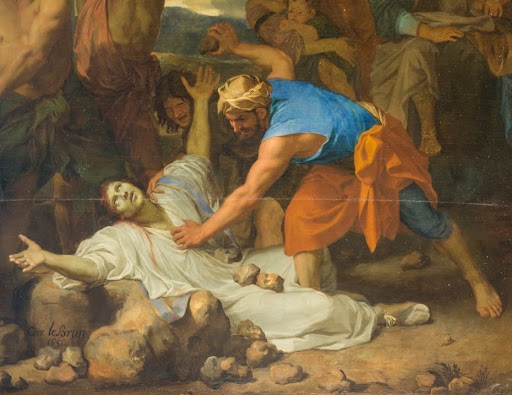
Of the eleven disciples that were still with Jesus at his crucifixion and resurrection, only John would die a natural death — albeit in imposed exile on the island of Patmos. All of the others were martyred for their faith. Stephen’s execution is depicted in Acts 7 with the future Apostle Paul not only looking on, but instigating the entire affair. Subsequent generations of Christian leaders were also killed. Polycarp, the Bishop of Smyrna and former student of the Apostle John, was eighty-six years old when he was burned alive in 155 A.D. Justin Martyr, an increasingly popular Christian apologist, was beheaded, along with his students, in 165 A.D. for refusal to sacrifice to the Roman gods. Perpetua and her bond-servant Felicity were arrested for their faith and ripped apart by wild animals in 203 A.D., but not before journaling of their devotion to Christ in a way that inspired hundreds.
The faith of Christ’s followers was strengthened through their persecution to the point that they were willing to endure horrific deaths when denying their faith and going along with the cultural expectations for the good life and flourishing would have rescued them from their fate.
The author of Hebrews latches onto this theme as well.
“Therefore, since we are surrounded by so great a cloud of witnesses, let us also lay aside every weight, and sin which clings so closely, and let us run with endurance the race that is set before us, 2 looking to Jesus, the founder and perfecter of our faith, who for the joy that was set before him endured the cross, despising the shame, and is seated at the right hand of the throne of God. Hebrews 12:1–2.
Here, Jesus is presented as enduring suffering that would lead to his death “for the joy set before him.” In the midst of persecution, Jesus focused so intently on pursuing the joy of God through doing the will of the Father and more fully in his welcome to his side, and being identified as his Son, that the persecution served to strengthen him for the torture and death that was ahead.
True persecution, therefore, strengthens the church, as we share in one another’s suffering. Not only is the person suffering strengthened, but those seeing their persecution are strengthened to continue on. When Christians claim “persecution” when they are actually provoking suffering, the church is weakened because it is sending a confusing and wrong message about the actual path of righteousness, the good life, and flourishing.
Persecution Strengthens the Church
The church grows through the witnesses of Jesus and through persecution.
8 But you will receive power when the Holy Spirit has come upon you, and you will be my witnesses in Jerusalem and in all Judea and Samaria, and to the end of the earth.” Acts 1:8.
This growth came through the original eleven disciples, some of those listening to Jesus on the side of that mountain, others who watched Jesus die, and those that heard the gospel after the persecution that broke out after the stoning of Stephen.
And there arose on that day a great persecution against the church in Jerusalem, and they were all scattered throughout the regions of Judea and Samaria, except the apostles. Acts 8:1.
Despite all attempts to inflict suffering upon Christians over the past two millennia, the church has grown. The entire Book of Revelation, written by the Apostle John, was penned as a pastoral letter of encouragement to a church facing increasing persecution.
9 After this I looked, and behold, a great multitude that no one could number, from every nation, from all tribes and peoples and languages, standing before the throne and before the Lamb, clothed in white robes, with palm branches in their hands, 10 and crying out with a loud voice, “Salvation belongs to our God who sits on the throne, and to the Lamb!” […]
13 Then one of the elders addressed me, saying, “Who are these, clothed in white robes, and from where have they come?” 14 I said to him, “Sir, you know.” And he said to me, “These are the ones coming out of the great tribulation. They have washed their robes and made them white in the blood of the Lamb.” Revelation 7:9–110, 13-14.
One of the greatest persecutions of the church would lead not to the fall of Christianity, but to the fall of Rome, and the spread of Christianity. Perhaps that is a message that is also applicable today when those serving and leading in the public square are faced with difficult decisions about pursuing righteousness, the good life, and flourishing. Decisions of obedience that may lead to them losing elections because they are not willing to embrace attack ads, being moved off a project because they were not willing to “do whatever it takes to win,” or missed out on an appointment because they were unwilling to pledge a loyalty to their chief that included violating their loyalty to Christ.
The blessedness of persecution comes not from the accolades of others, but from being identified with Christ, from the reward he promises those who lose what the world counts as blessing, and from how it is revealing, strengthening, and growing the church as we serve and lead in and for the public square. Concisely and colloquially stated, “Y’all’s reward is great in heaven.”
Application Questions
Consider the last time your convictions cost you something at work, was it the righteousness — or was it how you carried it? What informed your determination? How can you reconcile this assessment through the gospel?
Are there places where you are not encouraging the good, restoring the broken, creating the missing, or opposing the evil due to a worry of persecution? If so, what are those areas and how might you properly follow the call to Jesus in the face of possible persecution?
[Faithful Prayer]
- Cabinet Agency: The servants and leaders with the Department of the Treasury, and Secretary Scott Bessent, as they unveil sweeping new sanctions on Iran, as well as threatening new and severe sanctions on nations believed to be trading with Iran.
- Think Tank, Lobby group, NGO: The Center for Strategic and International Studies, as they continue their work of researching and advising on national security, defense policy, and the strength of America’s defense industrial base.
- Weekly delegation: The servants and leaders with the delegation of the State of Indiana, after all eleven of the state’s congressional delegates joined in a letter urging President Trump to approve a Major Disaster Declaration following widespread storm damage and highly publicized blackouts from tornadoes and flooding across the state.
- News events: For those in the Treasury Department, SEC, Commerce, HUD and other departments as they confront the nation’s gross federal debt surpassing $40 trillion for the first time, a milestone reached just five months after crossing $39 trillion and one that has arrived years ahead of earlier projections. Interest payments on the debt now consume a growing share of the federal budget, crowding out other priorities, while budget watchdogs warn that neither Congress nor the White House has a credible plan to slow its growth. That the Lord would give our leaders the courage to confront hard fiscal choices rather than pass them on, and the humility to govern with future generations in mind.
- Personal requests: For a couple enjoying their first pregnancy and another praying for one. For a senior department official under immense pressure on a project with implications for global financial markets. For two individuals involved in high level diplomacy. For someone quite upset about how the first week of school went for their child. For a staff person whose work for the past year will not ever make it to the floor for a vote. For a family transition back to the states after a year overseas.
[The Page, The Pod & The Stack]
- READ this FIRST → Christianity Today reported on the volunteer response to Colombia’s earthquake, where Christians and neighbors across the country sent supplies, served meals, and dug through rubble to help communities in Pereira and beyond recover.
- LISTEN to this NEXT → Comment magazine’s Zealots at the Gate released this podcast episode with David Brooks on the disappearance of political moderation and what it would take to recover a more temperate, less zealous posture in public life.
- STACK this FIRST → Aaron M. Renn published this article on the unraveling of the online right media ecosystem and the rise of a more effective online left, and what that reversal in the “who dominates social media” narrative means for how ideas now spread in American public life.
- First Things published Darel Paul’s essay on the Jason Arday scandal at Cambridge, using the episode to examine how therapeutic culture has eroded academic standards in higher education.
- Jake Meador published this article on the disappearance of Grantland and what it reveals about digital media today, arguing that when columnists get remade into media personalities who can rival or outlast the institutions that employ them, writing itself, and the readers who love it, end up losing.
[What’s Happening]
This Week:
- Monday, August 24, 2:00pm – 4:00pm – The Center for Strategic and International Studies is hosting an in person panel discussion, AI Agent Containment Failures: Technical Realities and Policy Responses.
- Thursday, August 27, 1:30pm – 3:30pm – The Urban Institute is hosting a hybrid event, Who Owns the Future? A Showcase of Ideas for a More Locally Owned Economy, discussing the effects on the economic community from extreme wealth concentration, and how these trends can be countered.
- Monday, August 24 – Monday, August 31 – This week is DC Restaurant Week, with hundreds of restaurants across the city offering fixed-price menus at $25, $35, and $55, making it one of the best times of the year to try a new spot.
- Now through September 7 – As summer comes to an end, the Renwick Gallery invites you to Step right up to the first major exhibition to survey American state fairs’ extraordinary and unconventional crafts from the nineteenth century to the present with State Fairs: Growing American Craft
Next Week:
- Tuesday, September 1, 1:30pm – 4:25pm – The American Enterprise Institute is hosting an in person event, Graduate Education After Grad PLUS, examining what comes next for financing graduate school now that the federal Grad PLUS loan program has ended.
- Thursday, September 3, 11:00am – 12:00pm – The Cato Institute is hosting an in person policy forum, From Red Tape to Real Choice: Reforming Childcare Policy, examining why childcare costs so much and whether deregulation, rather than increased government spending, is the better path to affordability.
Faithful Presence exists to provide whole-life discipleship in the whole of life for the whole of the public square. Join us as we seek renewal in politics and the public square by becoming a Supporting Partner.
Find Us On: LinkedIn | Instagram | Facebook | YouTube | Apple & Spotify