
The Sermon on the Mount: Blessed are the Merciful
[First Things] The new website is coming!
We will have lots of new content, discipleship resources, and opportunities to engage in whole-life discipleship, in the whole of life, for the whole of the public square.
We are searching for a half-time Chief of Staff! Successful references will be duly appreciated!
[The Devo] The Merciful and Merciless Public Square
Seeing the crowds, he went up on the mountain, and when he sat down, his disciples came to him2 And he opened his mouth and taught them, saying:
3 “Blessed are the poor in spirit, for theirs is the kingdom of heaven.
4 “Blessed are those who mourn, for they shall be comforted.
5 “Blessed are the meek, for they shall inherit the earth.
6 “Blessed are those who hunger and thirst for righteousness, for they shall be satisfied.
7 “Blessed are the merciful, for they shall receive mercy.
8 “Blessed are the pure in heart, for they shall see God.
9 “Blessed are the peacemakers, for they shall be called sons of God.
10 “Blessed are those who are persecuted for righteousness’ sake, for theirs is the kingdom of heaven.
11 “Blessed are you when others revile you and persecute you and utter all kinds of evil against you falsely on my account. 12 Rejoice and be glad, for your reward is great in heaven, for so they persecuted the prophets who were before you.
The Paradox of Mercy in the Public Square
Perhaps one of the most paradoxical aspects of the public square relates to the concept of mercy. Servants and leaders are often drawn to positions in Congressional offices, Cabinet and sub-Cabinet agencies, NGOs, think tanks, policy centers, and lobby groups to pursue mercy for those who, according to their ideological commitments, are deserving. Within the public square, justice and mercy are pursued for the exploited, the trafficked, the disabled, the disenfranchised, and the vulnerable.
Yet, the public square itself is often merciless in its treatment of those inside and outside its walls. News networks and social media are financially rewarded for round-the-clock coverage of the villain of the day and the public stumble. Whether it is a policy or a personal matter, ratings are ratings regardless of the collateral damage. But blaming the media machine is only a red herring from the real culprit: our desire for the spectacular and salacious. Conversely, depending on the administration in power and the cultural moment, business owners, blue-collar workers, the wealthy, and the poor could end up on the receiving end of a policy aimed at punishing production or behavior suddenly recategorized as contrary to flourishing.
Fostering unmerciful outcomes from an institution created by God to promote mercy is simply another in an unending stream of perversions of God’s good gifts to and for his people. Perhaps the paradox exists because Satan understands the central role mercy plays in the mission of God and the redemptive-historical narrative.
Mercy in the Old Testament
Mercy makes an early appearance in Scripture, with God creating man and then taking him and placing him in the Garden. Calling this an act of mercy may seem odd, but considering that man was created somewhere else and did nothing to merit being placed into such a state of grace.
Immediately after the Fall and the first couple’s failure to obey their God, they are met with another unmerited response,
8 And they heard the sound of the LORD God walking in the garden in the cool of the day, and the man and his wife hid themselves from the presence of the LORD God among the trees of the garden. 9 But the LORD God called to the man and said to him, “Where are you?” 10 And he said, “I heard the sound of you in the garden, and I was afraid, because I was naked, and I hid myself.” 11 He said, “Who told you that you were naked? Have you eaten of the tree of which I commanded you not to eat?” 12 The man said, “The woman whom you gave to be with me, she gave me fruit of the tree, and I ate.” 13 Then the LORD God said to the woman, “What is this that you have done?” The woman said, “The serpent deceived me, and I ate.”
Notice that the LORD God is not presented as someone on a rampage, but as lovingly seeking a couple who were motivated to hide out of shame and fear. In response, this act of mercy is met with the couple’s obfuscation and blame-shifting. Despite their banishment from the Garden, the couple is mercifully promised a redeemer (Gen 3:15) and allowed to continue their original charge to be fruitful and multiply, fill the earth, and subdue it.
Cain and Abel, Sodom and Gomorrah, Noah and the Flood, and the Tower of Babel follow. Each episode demonstrates that man’s relationship with God is built upon God’s steadfast love and commitment to mercy.
It’s no wonder then that mercy is not only at the center of the grand narrative of redemption but is also at the center of God’s personal name. After mercifully rescuing the people out of slavery in Egypt, God gives Moses the terms of the Law at Mt. Sinai. After a lengthy series of conversations, Moses asks to see God, and God obliges, declaring his true identity.
34 5 The LORD descended in the cloud and stood with him there and proclaimed the name of the LORD. 6 The LORD passed before him and proclaimed, “The LORD, the LORD, a God merciful and gracious, slow to anger, and abounding in steadfast love and faithfulness, 7 keeping steadfast love for thousands, forgiving iniquity and transgression and sin, but who will by no means clear the guilty, visiting the iniquity of the fathers on the children and the children’s children, to the third and the fourth generation.” 8 And Moses quickly bowed his head toward the earth and worshiped. 9 And he said, “If now I have found favor in your sight, O LORD, please let the LORD go in the midst of us, for it is a stiff-necked people, and pardon our iniquity and our sin, and take us for your inheritance.”
10 And he said, “Behold, I am making a covenant. Before all your people I will do marvels, such as have not been created in all the earth or in any nation. And all the people among whom you are shall see the work of the LORD, for it is an awesome thing that I will do with you. Ex 34:1–10.
God’s name, represented in Hebrew Scripture as YHWH, is translated into English as “ the LORD. The capitalized letters signify the covenant name of the one and only true God. Whenever we read the LORD said or did this or that, we should insert, “The LORD, the LORD, a God merciful and gracious, slow to anger, and abounding in steadfast love and faithfulness, 7 keeping steadfast love for thousands, forgiving iniquity and transgression and sin.”
Mercy is literally God’s name.
Mercy in the New Testament
The invitation to follow Jesus is an invitation to offer and receive mercy. This is clear from Matthew’s depiction of Jesus calling of Matthew, an unworthy, unclean, and corrupt tax collector,
9 As Jesus passed on from there, he saw a man called Matthew sitting at the tax booth, and he said to him, “Follow me.” And he rose and followed him.
10 And as Jesus reclined at table in the house, behold, many tax collectors and sinners came and were reclining with Jesus and his disciples. 11 And when the Pharisees saw this, they said to his disciples, “Why does your teacher eat with tax collectors and sinners?” 12 But when he heard it, he said, “Those who are well have no need of a physician, but those who are sick. 13 Go and learn what this means: ‘I desire mercy, and not sacrifice.’ For I came not to call the righteous, but sinners.” Matt 9:9–13.
We should not understand this passage as contradicting the previous call to hunger and thirst for righteousness, but a rebuke of those who see themselves as righteous on their own merit and uninterested in acknowledging that the list of those who are in need of mercy includes themselves. What this passage makes clear is that Jesus, who is the incarnation of “The LORD, the LORD, a God merciful and gracious, slow to anger, and abounding in steadfast love and faithfulness,” desires hearts and hands attuned to mercy rather than rote participation in religious activities.
The original reader would have caught that Jesus was repeating the words of his Father to the Prophet Hosea, who the LORD asked to enter into the covenant of marriage with a prostitute in order to underscore his manifestation of mercy,
For I desire steadfast love and not sacrifice,
the knowledge of God rather than burnt offerings.
7 But like Adam they transgressed the covenant;
there they dealt faithlessly with me. Hosea 6:6-7
The ministry of Jesus is the paradoxical ministry of mercy. Jesus associated with individuals who were considered unworthy of mercy: the Syrophoenician woman, the woman caught in adultery, the occupying Roman soldier with a dead son, the blind beggar, the Samaritan woman at the well, the disciple who denied him three times, the crowd who asked for Barabbas, and the thief on the cross. Additionally, he showed mercy to the poor, the hungry, the sick, the disabled, the elderly, the widowed, and the foreigner.
The response of the public square to this ministry of mercy was, of course, crucifixion. Yet, ultimately and paradoxically, submitting to this merciless treatment was his greatest act of mercy.
The Call to Mercy
When Jesus says, “As the Father sent me, so I am sending you” (John 20:21), he is inviting his followers to participate in Christ’s mission of making all things new. Whole-life discipleship that encompasses spiritual, emotional, relational, vocational, intellectual, cultural, and evangelical formation is necessary for the tsaddiqim who seek to offer mercy through encouraging what is good, restoring the broken, creating what is missing, and opposing what is evil. Not just because it provides the basis of discernment, but also the basis of endurance.
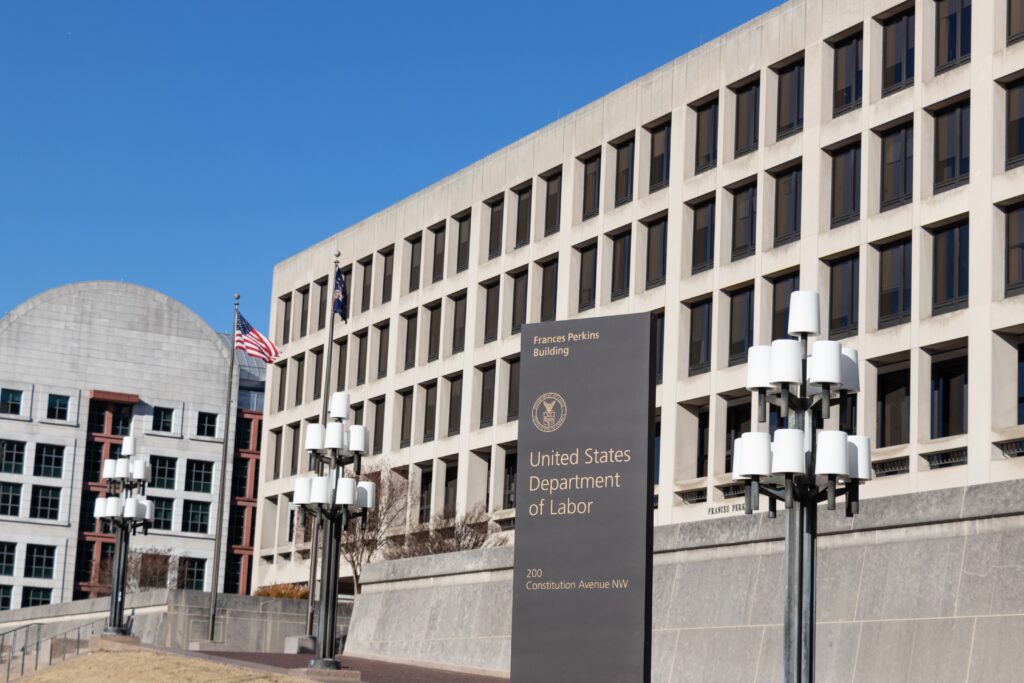
Through engagement with and work in the public square, Christians, in harmony with the Old Testament tsaddiqim, are uniquely positioned and instructed to offer mercy. Through legislation and those at HUD, HHS, and Labor, mercy is offered to the poor, hungry, and homeless by ensuring a well-functioning social safety net (Lev. 19:9), to workers by ensuring they are paid on time (13), and to the disabled who face all manner of obstacles (14). Those serving and leading in the DOJ are offering mercy to those seeking justice in the courts, regardless of their economic status (15). Within the Commerce Department, mercy is extended to those engaging in the markets (35).
Further, Christians offer mercy to those in need without inflicting harm on others, because mercy is not motivated by retribution. Rather, in harmony with Aristotle, our pursuit of the good life includes offering and receiving mercy as an outgrowth of equity and justice.
We do so, recognizing that, as sinners, we are sometimes enticed away from mercy and towards “enmity, strife, jealousy, fits of anger, rivalries, dissensions, divisions and envy.” When that happens, and it will, we are not left without an example of how to respond.
51 To the choirmaster. A Psalm of David, when Nathan the prophet went to him, after he had gone into Bathsheba.
1 Have mercy on me, O God, according to your steadfast love;
according to your abundant mercy blot out my transgressions.
2 Wash me thoroughly from my iniquity, and cleanse me from my sin! Psalm 51:1–2.
Thankfully, while the public square and the court of public opinion may respond mercilessly to those offering and seeking mercy, the God of steadfast love and faithfulness promises that his disciples will ultimately, and unmeritoriously, receive mercy.
And, he always makes good on his promises.
Application
How does this devotional illuminate areas where you could use your position as a servant and leader to offer mercy?
In your experience, how has the public square demonstrated a capacity for responding mercilessly to your efforts to pursue mercy? How do Exodus 34 and the crucifixion of Christ help to reframe this event?
[Faithful Prayer]
-
Cabinet Agency: The servants and leaders with the Department of Homeland Security, and Secretary Markwayne Mullin, as it again receives funding after a 75-day partial shutdown and oversees a long-awaited renovation to the Federal Emergency Management Agency.
-
Think Tank, Lobby group, NGO: The Fair Elections Center, as they continue their non-partisan analysis of voting rights and civic engagement.
-
Weekly delegation: The servants and leaders of the delegation of the State of Louisiana, amidst a long-running and heated process of redistricting that made it all the way to the Supreme Court.
-
News events: On Wednesday, with numerous implications for the Department of Justice, the Supreme Court voted 6-3 along ideological lines to strike down a Louisiana redistricting map challenged as racially discriminatory. This decision has put key provisions of the Voting Rights Act into question, especially those that protect the existence of ‘majority-minority districts,’ which often act as crucial bastions of support for the Democratic Party in otherwise red states.
-
Personal requests (Michael will fill in): For all the individuals present at last week's White House Correspondents' dinner, many of whom are dealing with trauma. For two couples continuing to pursue pregnancy. For a couple in diplomatic service overseas. For someone awaiting a high-level appointment. For someone considering a run for national office. For three individuals working in security services dealing with longer-than-usual hours.
-
For Faithful Presence, as we search for a Chief of Staff to help steward our continuing growth!
[The Page, The Pod & The Stack]
-
LISTEN to this FIRST → The Gospel Coalition published this article detailing the concept of ‘financial nihilism,’ how this is destroying the finances and mental health of Gen-Z, and how this mindset can be changed in tangible and noticeable ways.
-
READ this NEXT → The Acton Institute published this fascinating article discussing the impact of the Second World War, and genocidal policies within the conflict, on the replacement of Christianity with secular history as society’s foundation.
-
STACK this FIRST → Using Frankenstein’s monster as a lens, this article, published by the Center for Bioethics and Human Dignity, argues that profound loneliness should be treated as a serious form of harm in bioethics, and that human connection should be seen as an important factor in evaluating the benefits of new technologies.
-
The American Enterprise Institute published this op-ed piece discussing the tension between the federal government and the private company Anthropic over moral guardrails for its artificial intelligence technologies.
-
The Center for Public Justice published this thought-provoking piece arguing that the strictness of the American justice system shows towards first-time offenders creates a hostile environment that many find difficult to break free of.
[What’s Happening]
This Week
-
Tuesday, May 5, 11:00 am to 12:00 pm ET, Bipartisan Policy Center presents a hybrid event, Housing Innovators: Building the Future of Affordable Housing, to examine a range of factory-built housing types, the challenges of scaling these solutions, and opportunities for reform at the local, state, and federal levels.
-
Wednesday, May 6, 4:00 pm - 4:45 pm, the Heritage Foundation’s President Kevin Rogers is having an online conversation with former White House Press Secretary Sean Spicer, Trump’s Second Term: Policy, Personnel, and Strategy.
-
Thursday, May 7, 2:00 pm - 3:00 pm, the Aspen Institute is holding an online panel discussion, Investing in Job Quality in the South, discussing how to use philanthropic and financial resources to improve economic opportunity across the American southeast.
-
Friday, May 8, 1:30 pm - 2:30 pm, the Trinity Forum is hosting an online conversation with Anglican priest & author Tish Harrison Warner, Cultivating Christian Resilience, discussing how habits rooted in the early Church can provide a moral bedrock in a confusing age.
-
Saturday, May 9, you can take part in EU Embassies’ Open House. Take your very own day-trip to Europe and enjoy the Old Continent without any jet lag. From Ireland and Italy to Spain and Slovakia, all European Union member states participate in this citywide open house experience.
Next Week
-
Monday, May 11, 5:00pm - 6:15pm, the American Enterprise Institute is hosting a conversation with Senior Fellow Christopher J. Scalia, The American Dream Lecture Series: Education for Freedom.
-
Tuesday, May 12, 11:30am - 1:00pm, the Brookings Institution is hosting a hybrid conversation, The Rise of Prediction Markets: Level Playing Field or Rigged Game? A group of panelists, including Senator Adam Schiff of California, will discuss the rise of prediction markets such as Kalshi and Polymarket and whether they democratize finance or institutionalize insider trading.
-
Tuesday, May 12, 1:00pm - 2:30pm, the Hudson Institute is holding an in-person discussion, China’s Persecution: Assault on All Faiths, discussing the Chinese Communist Party’s relentless attacks on organized religion and how these actions play into their overarching ideological goals.
-
Friday, May 15, 1:30 pm - 2:30 pm, the Trinity Forum’s Senior Fellow, Makoto Fujimura, and author Haejin Shim Fujimura are having an online discussion about their new book, Beauty and Justice: Creating a Life of Abundance and Courage.
[Last Things]
-
We are recording podcasts, but posting is on hold while the website is being remodeled.
-
Please let us know how we can serve you, and any prayer requests, which are always kept confidential
If you enjoy this newsletter, please share it with a friend. If you want to join a Bible study, discipleship cohort, or reading group, please get in touch!
Faithful Presence exists to provide whole-life discipleship in the whole of life for the whole of the public square. Join us as we seek renewal in politics and the public square by becoming a Supporting Partner.
Find Us On: LinkedIn | Instagram | Facebook | X | YouTube | Apple & Spotify