
An Introduction to the Sermon on the Mount
[First Things]
-
New Cohorts: We are launching two new discipleship bi-weekly cohorts the week of March 16th, using our 1 Peter: Whole Life Discipleship for the Public Square curriculum.
-
In-person Washington-focused cohort meeting bi-weekly on Wednesday mornings at 6:30 am near Metro Center station.
-
Online ministry leaders cohort meeting bi-weekly on Saturday mornings at 7:00 am via Zoom.
-
Click here to request more information.
-
-
-
Faithful Presence is proud to introduce Samantha Whitney as our newest staff member, who will serve as our Director of Partnership Support.
-
Look for The Faithful Presence Podcast to start releasing new episodes later this week.
[The Devo] What does “Blessed” mean? (Part 1 of 2)
“I see what you did there” is an expression used to acknowledge a reference in a phrase or action made by the primary speaker to an intended audience. This reference might fly over the inattentive listener’s head, but the astute observer catches it. Sometimes these allusions are intentionally vague and identified only by those with eyes to see or ears to hear. Other times, the reference is so obvious that missing it would signify a complete disconnect from critical cultural artifacts. The beginning of the Sermon on the Mount begins with the latter.
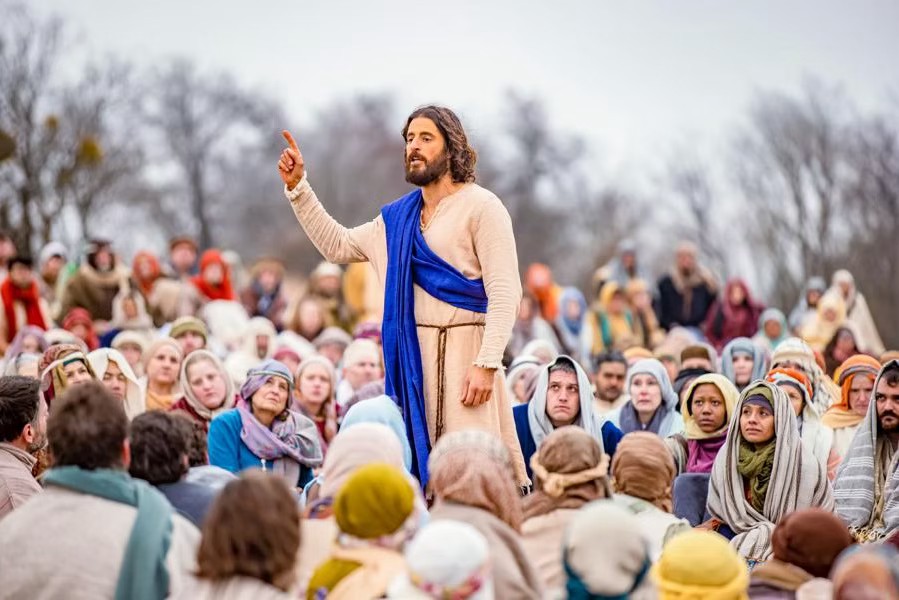
To properly understand the Beatitudes, it’s important to recognize that the words of Jesus are not occurring in a contextual vacuum. Those gathering to him were Jews, who knew their Old Testament and could recognize allusions to well-known texts via the teacher’s use of key words, phrases, or concepts. So the best starting point is not, “How should we hear and understand the Beatitudes,” but “How did those gathering to Jesus on the mountain hear and understand the Beatitudes?”
2 And he opened his mouth and taught them, saying:
3 “Blessed are the poor in spirit, for theirs is the kingdom of heaven.
In opening with the expression “Blessed are the”, Jesus has immediately directed his audience to two prominent and guiding cultural understandings of principles for life: One Jewish and the other Greek.
An Insufficient Understanding of “Blessed.”
For the Jews in the crowd, hearing “Blessed are the...” would tune them to The Psalms, a collection of five books and a total of 150 songs, which served as the Jewish songbook. The Psalms are arranged in an intentionally theological and pastoral manner, and begins with a song whose lyrics paint a picture of living as a member of the people of God.
Psalm 1
1 Blessed is the man who walks not in the counsel of the wicked,
nor stands in the way of sinners, nor sits in the seat of scoffers;
2 but his delight is in the law of the LORD, and in his law he meditates day and night.
3 He is like a tree planted by streams of water that yields its fruit in its season,
and its leaf does not wither. In all that he does, he prospers.
4 The wicked are not so, but are like chaff that the wind drives away.
5 Therefore, the wicked will not stand in the judgment,
nor sinners in the congregation of the righteous;
6 for the Lord knows the way of the righteous,
but the way of the wicked will perish.
Just in case anyone were to mistake this as a recipe for achieving earthly acclaim and wealth, let alone one that avoids suffering, the halfway point of the Psalms begins with Psalm 73, which seems to present a paradoxical picture of life committed to seeking the kingdom of God.
73 A Psalm of Asaph.
1 Truly God is good to Israel, to those who are pure in heart.
2 But as for me, my feet had almost stumbled, my steps had nearly slipped.
3 For I was envious of the arrogant when I saw the prosperity of the wicked.
4 For they have no pangs until death; their bodies are fat and sleek.
5 They are not in trouble as others are; they are not stricken like the rest of mankind.
6 Therefore, pride is their necklace; violence covers them as a garment.
7 Their eyes swell out through fatness; their hearts overflow with follies.
8 They scoff and speak with malice; loftily, they threaten oppression.
9 They set their mouths against the heavens, and their tongues strut through the earth.
10 Therefore, his people turn back to them, and find no fault in them.
11 And they say, “How can God know? Is there knowledge in the Most High?”
12 Behold, these are the wicked; always at ease, they increase in riches.
13 All in vain have I kept my heart clean and washed my hands in innocence.
14 For all the day long I have been stricken and rebuked every morning. (v.1-15)
This Psalm, building on Psalm 1, seems to indicate that the honest follower of God might rightly discern a world that operates more like that depicted in Billions, Succession, or House of Cards in rewarding vice rather than virtue. Those who lean on pride and narcissism seem to get ahead while the righteous endure suffering. Those who live as servants and leaders in the public square may understand the confusion, frustration, and even exasperation of Psalm 73 all too well. In fact, this Psalm appears to state that being culturally irrelevant and operating on the weak side of a power differential is not an abnormal occurrence for those who love the LORD.
How then shall we understand “Blessed is the one who?” if it not intended to convey a path to life filled with properity and absent of suffering?
A Fuller Understanding of “Blessed”
Thankfully, we are helped in our fuller understanding of “Blessed” through other Psalms which open with the same phrase,
Psalm 32:1-2
1 Blessed is the one whose transgression is forgiven, whose sin is covered.
2 Blessed is the man against whom the LORD counts no iniquity,
and in whose spirit there is no deceit.Psalm 41:1-3
1 Blessed is the one who considers the poor! In the day of trouble the LORD delivers him;
2 the LORD protects him and keeps him alive; he is called blessed in the land;
you do not give him up to the will of his enemies.
3 The LORD sustains him on his sickbed; in his illness you restore him to full health.Psalm 112:1-2
Praise the LORD! Blessed is the man who fears the LORD,
who greatly delights in his commandments!
2 His offspring will be mighty in the land; the generation of the upright will be blessed.Psalm 119:1-4
Blessed are those whose way is blameless, who walk in the law of the LORD!
2 Blessed are those who keep his testimonies, who seek him with their whole heart,
3 who also do no wrong, but walk in his ways!
4 You have commanded your precepts to be kept diligently.128:1-2
1 Blessed is everyone who fears the LORD, who walks in his ways!
2 You shall eat the fruit of the labor of your hands;
you shall be blessed, and it shall be well with you.
Through these Psalms, historically sung together by the very people now listening to Jesus preach, have cultivated an understanding of “Blessed are the,” not as a call to ethical living that leads to God’s favor, but as a description of people who live according to the Law proclaimed by Moses,
4 “Hear, O Israel: The LORD our God, the LORD is one. 5 You shall love the LORD your God with all your heart and with all your soul and with all your might. Deut 6:4–5.
In each of the Psalms that begin with “Blessed,” what is described is life in relationship with the LORD, the personal God of steadfast love and faithfulness who has promised to deliver his people from oppression and the slavery of sin. It is this LORD who now dwells with them in the flesh, is speaking directly to them, and declaring a fuller understanding of “blessed” and connecting it directly to life in the kingdom of God.
The original audience, dealing with religious and political forces that seemed more focused on power, prestige, and popularity than seeking the welfare of the land in which they dwell would have been ready for a message that offered real hope.
With his opening phrase, Jesus has hooked the Jewish listener in search of a life of blessing. But the skill with which Jesus begins this Sermon on the Mount, will also prompt those inculturated with Greek thought to say, “I see what you did there.”
That is the subject of our next lesson.
Application questions
How does your understanding of “blessed” correspond to the common application of Psalm 1 as a recipe for the favor of God within culture?
What aspects of Psalm 73 resonate with your own dissonance of the cultural understanding of “blessed?”
How do the other uses of “blessed” through the Psalms, reshape your understanding of the term?”
[Faithful Prayer]
-
Cabinet Agency: The servants & leaders at the Department of War, and Secretary Pete Hegseth, as they weigh grave strategic decisions and mounting international tensions amidst a growing American military presence in the Persian Gulf.
-
Think Tank, Lobby group, NGO: American Oversight, as they continue their important work of ensuring government transparency through Freedom of Information Act litigation.
-
Weekly delegation: The servants and leaders with the delegation of the state of Maryland as they navigate rising tensions with the federal government following new state legislation restricting local participation in federal immigration enforcement.
-
News events: In a 6-3 decision, the Supreme Court ruled that many of the international tariffs negotiated by the Trump administration over the past year were unlawful due to a lack of clear congressional authority. President Trump strongly condemned the ruling and has since sought to reimpose global tariffs under a different statutory authority, raising global tariffs from 10% to 15%.
-
Personal:
-
For Faithful Presence, as we work on several internal projects that will greatly expand our ministry capacity!
[The Page, The Pod & The Stack]
-
LISTEN to this FIRST → The National Association of Evangelicals published this conversation with Mark Noll and Walter Kim, discussing the effects of Christian faith on the formation of early American society.
-
READ this NEXT → The Lakelight Institute published this article by Glenn Wishnew about the tension between worldly ambition and Christian humility.
-
STACK this FIRST → The Center for Pastor Theologians published this reflection on how the church’s loss of cultural power can become an opportunity to recover a more faithful, Christ-centered form of witness rooted in humility rather than dominance.
-
Acton Institute published this piece by Gaetano Masciullo about the rise of big tech and how this threatens religious freedom and sanctity.
-
The Barna Group published this study detailing how younger generations are leading a return to Scripture, with rates of weekly bible reading skyrocketing among these demographics.
[What’s Happening]
This Week
-
Wednesday, Feb. 23, 2:00 pm - 3:00 pm, the Hamilton Project is hosting an online discussion, AI + Work: Building Pro-Worker AI, about ensuring AI technologies benefit workers instead of replacing them.
-
Thursday, Feb. 26, 5:30 pm - 7:00 pm, American University is hosting a conversation, The Unmaking of American Citizenship: How Americans Learned to Not Love Their Country, and What Can Be Done About It, about the decline of American patriotism and how this can be turned around.
-
Friday, Feb. 27, 12:00 pm - 1:00 pm, Faith and Law is hosting a forum with Dr. Os Guinness, Faith vs. Modernity, Modernity vs. Faith - the Showdown of the Century, exploring the deep tension and ongoing clash between religious faith and modern secular values in today’s world.
-
Friday, Feb. 27, 1:30 pm - 2:30 pm, the Trinity Forum is hosting an online conversation, Living a Non-Anxious Life, with author Alan Falding discussing the relationship between Christian faith and widespread anxiety disorders in modern America.
-
Friday, Feb. 27, 4:00 pm - 7:00 pm, the Omni Shoreham presents Jazz in the Lobby Happy Hour. What could be finer than listening to tunes from the Great American Songbook sung by a remarkable talent - Daniel Murray – surrounded by the approachable elegance of the historic Omni Shoreham Hotel. Join friendly folks in the Marquee Lounge and raise a glass to great legendary music and the new talent that transcends time.
Next Week
-
Wednesday, March 4, 10:30 am - 12:00 pm, the Heritage Foundation is hosting Restoring Peace Through Strength: The 2026 Index of U.S Military Strength, a comprehensive online analysis of the current state of the U.S military.
-
Wednesday, March 4, 11:00 am - 12:00 pm, the Bipartisan Policy Center is hosting an in-person discussion, Is Homeownership Still Part of the American Dream? on why it is increasingly difficult for young adults to buy a home, and if this remains a goal worth pursuing.
-
Friday, March 6, 12:00 pm - 1:00 pm, the Urban Institute is hosting a webinar, the State of the Safety Net, discussing the challenges faced in understanding eligibility, participation, and gaps and government social welfare programs.
-
Saturday, March 7, 11:00 am - 12:30 pm, the Institute on Religion & Democracy is hosting its Professional Women’s Brunch, with author & former naval aviator Dr. Susan Yoshihara discussing her work with the American Council on Women, Peace, & Security.
[Last Things]
-
Please let us know how we can serve you, and any prayer requests, which are always kept confidential
If you enjoy this newsletter, please share it with a friend. If you want to join a Bible study, discipleship cohort, or reading group, please get in touch!
Faithful Presence exists to provide whole-life discipleship in the whole of life for the whole of the public square. Join us as we seek renewal in politics and the public square by becoming a Supporting Partner.
Find Us On: LinkedIn | Instagram | Facebook | X | YouTube | Apple & Spotify