
1 Peter 3:18-22 The Blessing of Difficult Passages (Part 1 of 3)
[First Things]
Please let us know if you are interested in joining an in-person Washington discipleship cohort or reading group, have a pastoral concern, or are interested in our resources for churches.
Faithful Presence is looking for two interns for the summer. Please reach out to us if you are aware of someone who might fit well.
[The Devo] The Result of Living Differently with Everyone
For Christ also suffered once for sins, the righteous for the unrighteous, that he might bring us to God, being put to death in the flesh but made alive in the spirit, 19 in which he went and proclaimed to the spirits in prison, 20 because they formerly did not obey, when God’s patience waited in the days of Noah, while the ark was being prepared, in which a few, that is, eight persons, were brought safely through water. 21 Baptism, which corresponds to this, now saves you, not as a removal of dirt from the body but as an appeal to God for a good conscience, through the resurrection of Jesus Christ, 22 who has gone into heaven and is at the right hand of God, with angels, authorities, and powers having been subjected to him. 1 Peter 3:18-22
In this complicated passage, Peter returns for a third time to the centrality of Christ as our hope amid living as elect-exiles. Here, Peter is focusing on the importance of that hope when Christians experience suffering as a result of identification with Christ and living in obedience to him.
However, to make proper sense of this passage, attention must be paid to several perplexing aspects of these verses. While this passage was confusing and frustrating to even Martin Luther, recent scholarship can help us navigate the difficulties and lead us toward a cohesive understanding that does justice to the author’s original intent.
It is important to remember that the whole Bible is given to God’s people for their encouragement and discipleship. Difficult passages, like those in the Book of Revelation, are often overspiritualized or overliteralized to help us make sense of them in the present day. If the “locust” in Revelation 9 refers to helicopters and the “bear in the east” in Revelation 13 is Russia, that provides little comfort to people in the first century suffering and facing death for their faith. Proper engagement with difficult passages starts with asking the question, “What pastoral implication was intended for the first readers?”
Key questions for understanding this difficult passage
1. Where or when did Jesus go to proclaim his message after his death?
2. Who are the “spirits in prison?”
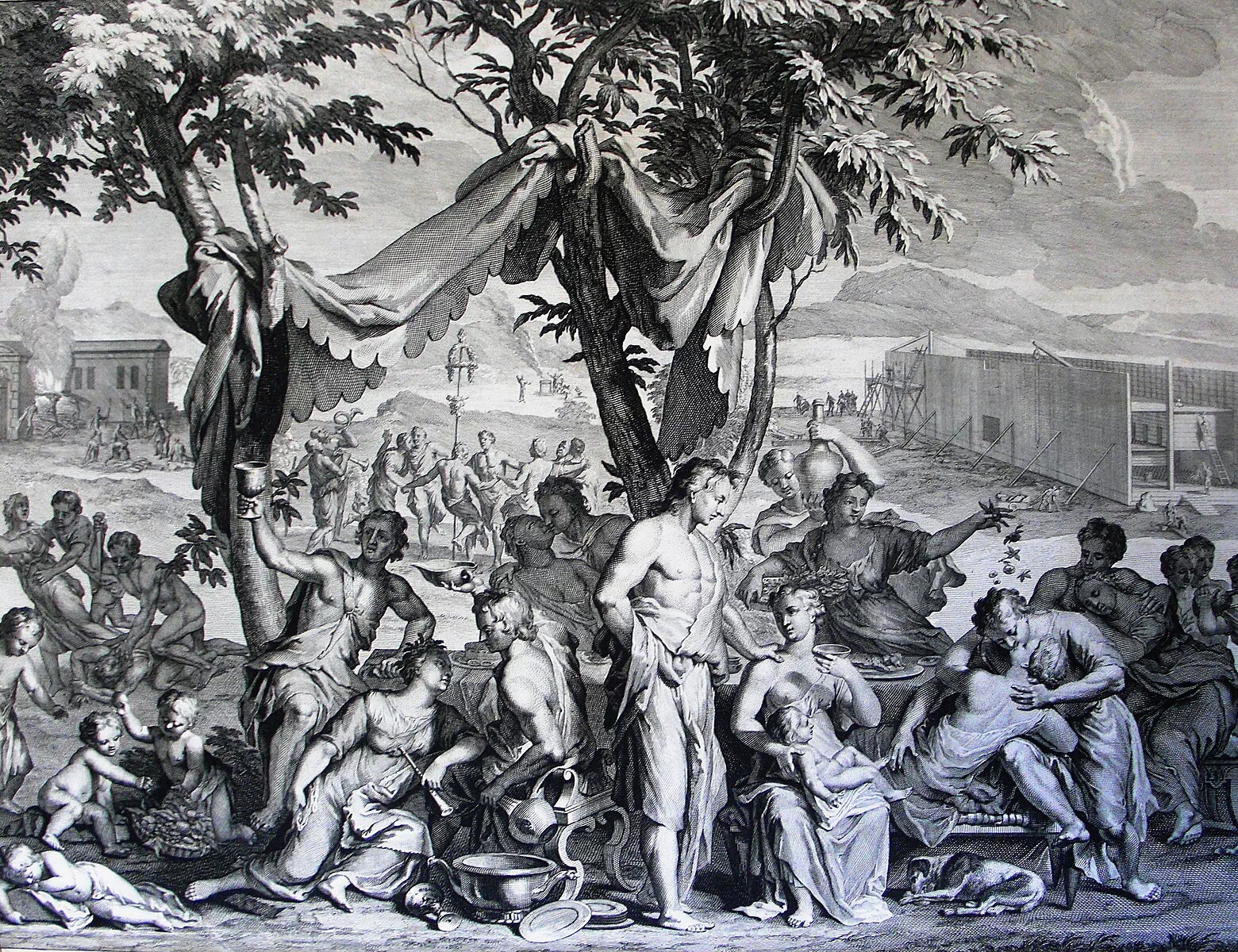
3. What is the connection to “the days of Noah?”
Option 1: Jesus preached in the Spirit through Noah to the people of Noah’s day.
This is the view embraced by Saint Augustine and Thomas Aquinas. Augustine was influenced by Plato, who promoted a ‘body and soul’ distinction. However, the terms for body and soul are not used here, but instead flesh and spirit. A problem with this view is that it separates Peter’s chronological depiction of Jesus proclaiming to people after his death, nor does it address the fact that they are neither “in prison” during Noah’s time, nor “in prison” after Noah’s time.
Option 2: Jesus preached to those in Hell during his death.
This is the view of early church fathers, Clement of Alexandria and Origen. Both were attempting to reconcile the hearing of the gospel message with rejection and judgment. This view would present an opportunity for those who had died without knowing of Jesus to respond positively to the good news through repentance and be transferred from the kingdom of darkness and into the kingdom of heaven. If rejected, it would serve as an announcement that their judgment was sealed.
However, in the New Testament, “prison” is a term that almost always refers to evil spirits restrained by God, and does not correspond to Hell in the Greek. If this were Hell, why would the text indicate that only the people who lived before Noah would hear the gospel? What is the basis for excluding the Patriarchs and all who follow (Gen 12)?
Option 3: The Enoch Option
21 When Enoch had lived 65 years, he fathered Methuselah. 22 Enoch walked with God after he fathered Methuselah 300 years and had other sons and daughters. 23 Thus, all the days of Enoch were 365 years. 24 Enoch walked with God, and he was not, for God took him. Genesis 5: 21–24
“What happened to Enoch?” was the subject of much ancient Jewish writing. During the time of Jesus, many Jews had read, or were familiar with, a work entitled “The Book of Enoch.” This book appears to have been lost from the middle of the second century until the middle of the eighteenth century. As such, while Origen and Tertullian would have had access, Augustine did not.
Commentator Dr. Karen Jobes, in her commentary on First Peter, building on the work of many others since 1980, believes this extrabiblical text is the key to making sense of the passage in 1 Peter 3:18-22. Her approach is undergirded by something called “speech-act theory.” In short, successful communication occurs between an author and an audience who have a shared language, history, and culture.
The Book of Enoch 10:20-14:7 (extra-biblical)
20 “And you, make the earth clean from all uncleanness and from all wrongdoing and from all sins, ungodliness and uncleanness that is upon the earth. Wipe it away. 21 And all the people will be serving and blessing and worshiping me. 22 And the whole earth will be made clean from all stain and from all uncleanness, wrath and suffering. I will never send it upon them again unto all the generations of the ages.”
11 And then I opened the chamber of blessing that is in heaven and brought them down upon the work and toil of the children of the people. 2 Then truth and peace will share together for all the days of the age and for all the generations of the people.
12 Before these words were spoken Enoch was taken, and nobody knew where he was taken and where he is now and what happened to him. 2 His works were with the watchmen and his days were with the holy ones. 3 And standing there, I, Enoch, was blessing the Lord of greatness, the King of the ages; and behold the watchmen of the Holy Great One (Group 1) called me: 4 “Enoch, scribe of righteousness, go and speak to the watchmen of heaven —any who left behind the high heaven, the holy eternal place, who were defiled with the women and just as the sons of the earth did, they did the same also, and took for themselves women. You have brought great destruction on the earth [See Genesis 6 below]. 5 And there will be no peace for you, nor remission of sins. And though they rejoice in their children, 6 they will see the murder of their beloved ones and they will groan over the destruction of their children. They will be bound forever and there will be for them no mercy and peace.”
13 Enoch said to Azael (a demon or Satan), “Go: There will be no peace for you; great judgment has come out against you to bind you [see Matthew 12 below]. 2 There will be neither pause nor questioning for you about which wrongs you brought to light and about all works of ungodliness, wrongdoing, and failure, all that you declared to the people.”
3 Then I went and spoke to all of them. They all were terrified: Trembling and fear gripped them. 4 They request that I should write to them records of questioning so that there might be a remission of sins for them, and that I might read to them the record of questioning before the Lord of heaven. 5 For they are not yet able to speak nor lift their eyes to the heaven from the shame of their sin; so they were condemned.
6 Then I wrote the record of their questioning and the prayer concerning their spirits and what they are asking, how there should be for them a remission of sins and length of days. 7 Then I went and sat upon the waters of Dan in the land of Dan, which is from the right side of Hermon toward the west. I read the record of their prayer. 8 As I was put to sleep, suddenly dreams came upon me and visions fell upon me and I saw visions of wrath. Then a voice came, saying, “Speak to the sons of heaven to reprove them.” 9 And being awakened, I came to them and all gathered together were sitting mourning in Ebelsata (which is between Lebanon and Senisel) while covering their faces. 10 Before them also I reported to them all the visions that I saw in my sleep. And I was beginning to speak words of righteousness, reproving the watchmen of heaven.
14 The book of the words of righteousness and reproving of the watchmen of the ages, according to the commandment of the Great Holy One in this vision. 2 I saw in my sleep that which I now speak with a tongue of flesh and with the spirit of my mouth, which the Great One gave to humans for speaking to each other so that he may perceive in his heart. 3 He created and gave to me to reprove watchmen, the sons of heaven.
4 I wrote your request from the angels and in my vision I was shown this: Your request was not received, 5 namely, that you may no longer go up to heaven for all time; and with the chains of the earth you are bound for all eternity. 6 Also, in the same way you may see the destruction of your beloved sons. Because their profit will not be for you, but they will fall before you by the sword. 7 And there will be no questions from you about them, nor about your own. Though you are weeping and praying and not speaking every word from the writing that I wrote.
Notice how the extrabiblical, but widely read, Book of Enoch 12:4 intersects with Genesis 6:1-8.
When man began to multiply on the face of the land and daughters were born to them, 2 the sons of God saw that the daughters of man were attractive. And they took as their wives any they chose. 3 Then the Lord said, “My Spirit shall not abide in man forever, for he is flesh: his days shall be 120 years.” 4 The Nephilim were on the earth in those days, and also afterward, when the sons of God came in to the daughters of man and they bore children to them. These were the mighty men who were of old, the men of renown.
5 The Lord saw that the wickedness of man was great in the earth, and that every intention of the thoughts of his heart was only evil continually. 6 And the Lord regretted that he had made man on the earth, and it grieved him to his heart. 7 So the Lord said, “I will blot out man whom I have created from the face of the land, man and animals and creeping things and birds of the heavens, for I am sorry that I have made them.” 8 But Noah found favor in the eyes of the Lord.
Additionally, the idea of binding of Satan and demons mentioned in Enoch 13:1 is also referenced by Jesus following the healing of a demon-possessed man in Matthew 12:22-32.
22 Then a demon-oppressed man who was blind and mute was brought to him, and he healed him, so that the man spoke and saw. 23 And all the people were amazed, and said, “Can this be the Son of David?” 24 But when the Pharisees heard it, they said, “It is only by Beelzebul, the prince of demons, that this man casts out demons.” 25 Knowing their thoughts, he said to them, “Every kingdom divided against itself is laid waste, and no city or house divided against itself will stand. 26 And if Satan casts out Satan, he is divided against himself. How then will his kingdom stand? 27 And if I cast out demons by Beelzebul, by whom do your sons cast them out? Therefore, they will be your judges. 28 But if it is by the Spirit of God that I cast out demons, then the kingdom of God has come upon you. 29 Or how can someone enter a strong man’s house and plunder his goods, unless he first binds the strong man? Then indeed he may plunder his house. 30 Whoever is not with me is against me, and whoever does not gather with me scatters. 31 Therefore, I tell you, every sin and blasphemy will be forgiven people, but the blasphemy against the Spirit will not be forgiven. 32 And whoever speaks a word against the Son of Man will be forgiven, but whoever speaks against the Holy Spirit will not be forgiven, either in this age or in the age to come.
Conclusion
Peter, therefore, appears to be referencing a story unfamiliar to us, but likely familiar to recent and largely Jewish converts living in first-century Asia Minor, where Noah was very popular. So popular that he even appeared on Roman coins as part of their syncretistic approach to trying to enfold conquered people’s religions into the Roman pantheon of gods. Against this, Peter’s message is that during his time in the grave, Jesus proclaimed his victory over all lesser forms of power, namely, the demons who decided to place their faith and hope in a narcissistic liar, and through his resurrection would come their shame and humiliation.
For them, reconciliation is not possible. For us, reconciliation is freely offered and the promise of ultimate redemption is secured by Christ who, in his suffering and death, and subsequent resurrection, keeps us safely in his care despite our suffering.
Application questions
What is your typical approach to passages that, upon initial reading, appear unclear or confusing? How does your typical response bless or hinder your formation in whole-life discipleship?
What practical (spiritual and emotional) pastoral impact would the understanding proposed by Dr. Jobes have likely had for the first-century readers, following what Peter has already said about living differently as Christians on the weak side of public square power differentials?
How does the resolution proposed by Dr. Jobes and other scholars reorient your understanding of this passage? How does this impact the way you navigate living differently as a Christian on the weak side of public square power differentials?
[Faithful Prayer]
Cabinet Agency: For the servants and leaders at the Office of Post Secondary Education (Education), as their work is daily complicated by court orders, administration directives, and media coverage.
Think Tank, Lobby group, NGO: Servants and leaders at the Christian Council for Colleges and Universities (CCCU), a “non-partisan organization striving to work effectively with all political parties to advance the cause of Christ-centered education.”
Weekly delegation: For the congressional delegation of California.
Agency News: Last Thursday, the Supreme Court issued an injunction to the Trump Administration regarding the dismissal of approximately 1300 employees at the Department of Education. Their initial dismissal and court-ordered reinstatement complicate the work of the department to facilitate the improvement and flourishing of the schools, colleges, and universities. As stated in an NPR article, “On Thursday, a federal judge in Massachusetts issued a preliminary injunction blocking President Trump and U.S. Education Secretary Linda McMahon from carrying out Trump's executive order calling for the secretary to close the Education Department. The judge also told the administration to reinstate the roughly 1,300 Education Department employees who were told in March that they would lose their jobs as part of a sweeping reduction-in-force and "to restore the Department to the status quo."
Personal requests: For continued patience and endurance for several Cabinet-agency staff. For a family that is preparing to move overseas with two school-age children for a one-year assignment. For a couple hoping to conceive their first child, and another expecting their first. For someone discerning the next step in their career as a policy expert. For the newly arriving interns who will be serving in Cabinet agencies, policy centers, lobbying firms, and on the Hill. For Senate staff working through the House’s recently passed budget.
[The Page, The Pod & The Stack]
→ Read this first → Christian Scholar’s Review has an extemely important piece on the on the importance of intellectual formation and it’s role in equipping disciples to live in a posture of faithful presence, “Intellectual Pilgrimage: Christians int he Contemporary Academy,” which serves as a review of the recently released the second edition of George Mardsen’s “The Outrageous Idea of Christian Scholarship”
The Stream offers some commentary on Pope Leo XIV’s first sermon, which has considerable implications for the relationship between Protestants and Catholics, “Pope Leo XIV Drops Papal Supremacy.”
First Things has a memorializing essay on the death of renowned and prolific Christian philosopher, Alasdair McIntyre (After Virtue), who passed away Friday at the age of 96, Recognizing the Importance of MacIntyre.
The Acton Institute now has a Substack: The Church in the Modern World. That platform now features a wonderful essay from back in February on “Immigration, Subsidiarity, and State Sovereignty in the Age of Trump.”
The Center for BioEthics and Human Dignity has an in-depth article on an increasingly common public policy topic, Embracing Suffering: The Christian Antidote to Euthanasia and Physician-Assisted Suicide.
[What’s Happening]
This Week
Friday, May 30, 1:00 pm - 2:30 pm ET, the Urban Institute hosts a Virtual Workshop: Using the Toolkit for Increasing Upward Mobility in Your Community. Whether you're a policymaker, a practitioner, or a community member, this workshop will guide you through how to use the toolkit to identify effective strategies and begin catalyzing change.
Saturday, May 31 - Sunday, June 1: The Armed Forces Cycling Classic returns to downtown Washington and Arlington as the region’s premier cycling event, with opportunities to participate for cyclists of all ages and abilities.
Next Week
Tuesday, June 3, 5:30 - 6:30 pm ET, the American Enterprise Institute hosts a hybrid event, The Triumph of Economic Freedom: A Book Event with Phil Gramm and Donald J. Boudreaux.
Wednesday, June 4, 2:00 – 3:00 pm EDT, the Center for American Progress hosts a hybrid event, Representing Working Class Voters, for a discussion with members of Congress about how to best promote a policy agenda for today’s working class.
Thursday, June 5, 2:00 - 3:00 pm EDT, the Center for American Progress hosts a hybrid event, America’s Role in the World: The Value of Leadership and Alliance for a conversation with Sen. Chris Murphy (D-CT) as part of CAP’s “What’s Next: Conversations on the Path Forward” series.
Friday, June 6, 1:30 - 2:30 pm EDT, The Trinity Forum hosts “An Online Interview with Dr. Miroslav Volf: Pursuing a Life Worth Living. Dr. Volf is the author of numerous books on cultural engagement and a seminal essay, “Soft Difference: Theological Reflections on the Relation Between Church and Culture in 1 Peter,” which was reprinted in the Presence Journal at the gracious agreement of the author.
[Two Thumbs Up] Biblical Theology in the Life of the Early Church, Stephen Presley (Baker, 2025)
In the introduction to this book, the author states that this most recent work should be read before reading his award-winning 2024 book, “Cultural Sanctification: Engaging the World Like the Early Church,” which we reviewed and recommended earlier this year because it lays the foundation for understanding why they engaged the world the way they did.
In Biblical Theology in the Life of the Early Church, Dr. Presley proposes that their manner of engagement had everything to do with the way they read the Bible. In the theological-academic world, there is an intensifying conversation surrounding the distinctions between Systematic Theology, which categorizes verses into theological topics, and Biblical Theology, which focuses on the redemptive narrative of the story Scripture is telling. As Presley puts it, “Early Christian theologians pay close attention to ‘the way the words go,’ but they are concerned with not merely isolated terms or phrases but also the relations of words, stories, and books that unite Scripture’s revelation. (67-68). Chief among his assertions is that the early Church Fathers perceived Scripture as not primarily concerned with conveying doctrine but with providing guidance as to what kind of person God wants to form.
The book spends a great deal of time in conversation with Irenaeus, Clement of Rome, Basil, Origen, Augustine, and others in reorienting the modern reader to a reading of Scripture that answers only “What is Scripture saying?” but “What is Scripture for my life and his people?” Biblical Theology in the Life of the Early Church is an excellent work that is accessible for the average reader and truly beneficial for the person pursuing whole-life discipleship for the whole of life. It is a refreshing and encouraging work that moves beyond the articulation of right doctrine and towards a way of living in faithful presence.
[Last Things]
If you enjoy this newsletter, please share it with a friend. If you want to join a Bible study, discipleship cohort, or reading group, please get in touch!
Faithful Presence exists to provide whole-life discipleship in the whole of life for the whole of the public square. Join us as we seek renewal in politics and the public square by becoming a Supporting Partner.
Find Us On: LinkedIn | Instagram | Facebook | X | YouTube | Apple & Spotify